

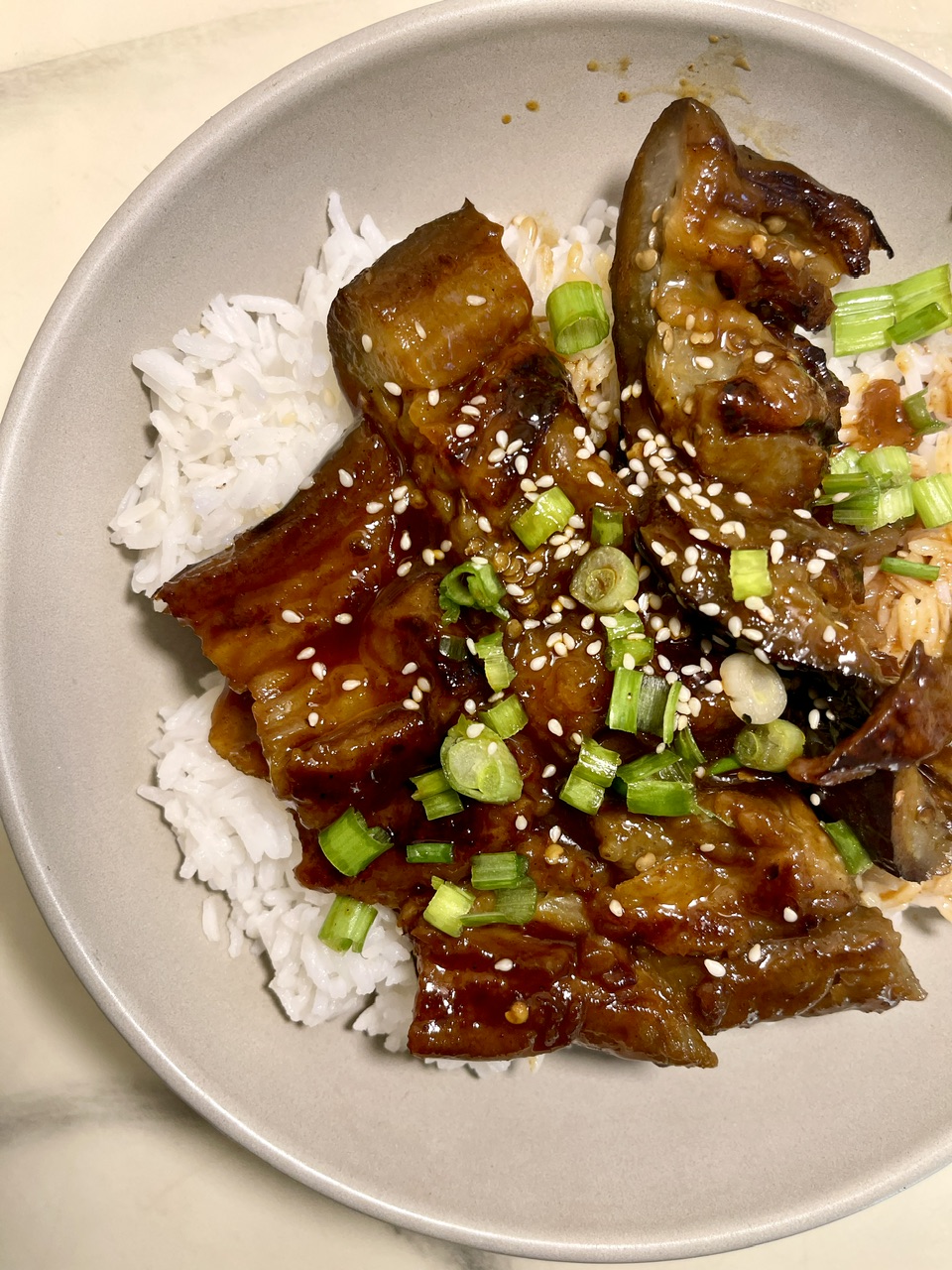
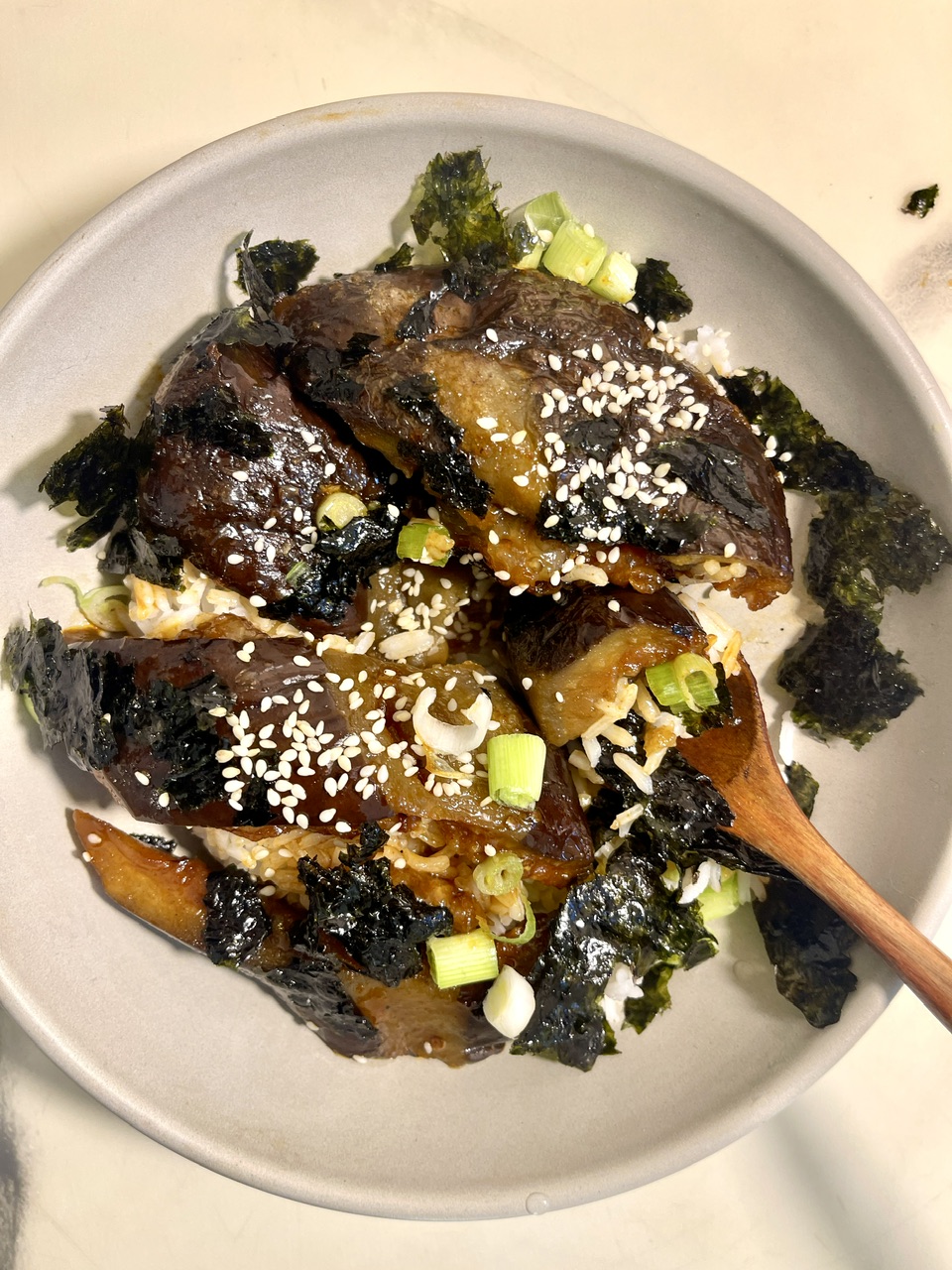
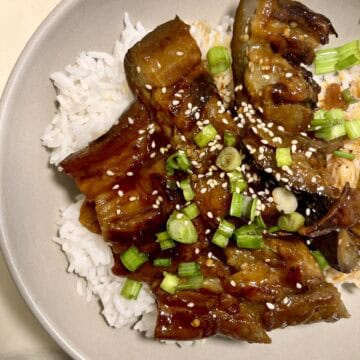
Silky, smoky-sweet, and lacquered in a glossy soy glaze, this vegan eggplant unagi is the plant-based take on Japan's beloved unagi kabayaki (grilled eel). The trick is simple: steam the eggplant until it's completely soft, slice it thin, dredge it in cornstarch, and pan-fry it until the edges crisp. Then brush it with a sticky soy-vinegar glaze and shower it with sesame seeds and nori flakes. Spoon it over hot rice and you've got a vegan unadon that tastes way fancier than the 30 minutes it takes.
What is eggplant unagi?
Quick answer: Eggplant unagi is a vegan version of Japanese grilled eel (unagi kabayaki) made with eggplant instead of fish. The eggplant is steamed until tender, sliced, coated in cornstarch, pan-fried until golden, and glazed with a sweet-savory soy sauce. It mimics eel's soft, melt-in-your-mouth texture and is usually served over rice as a vegan unadon (eel rice bowl).
In Japan, eel is glazed with tare, a thick, sweet soy sauce, and grilled until it's caramelized. Eggplant is the perfect stand-in because once it's steamed, its flesh turns custardy and tender, just like eel. The dark skin even looks the part. Home cooks in Japan have been making nasu no kabayaki (eggplant kabayaki) for years, and it's become one of the most popular plant-based Japanese dishes online.
This recipe at a glance
- Total time: 30 minutes
- Serves: 2 as a rice bowl main
- Method: steam, slice, dredge, pan-fry, glaze
- Texture: crisp-edged outside, buttery-soft inside
- Flavor: sweet, salty, tangy, and toasty
- Diet: 100% vegan, dairy-free, egg-free, nut-free, easily gluten-free
Why you'll love this vegan unagi
- That texture. Steaming first makes the eggplant ultra-tender all the way through, so it doesn't soak up a ton of oil when you fry it.
- Crispy, sticky edges. The cornstarch coating crisps in the pan and then grabs onto the glaze like velcro.
- Pantry ingredients. Soy sauce, vinegar, sesame oil, and cornstarch. No mirin or sake required.
- Restaurant-worthy in 30 minutes. It looks like something from a Tokyo eel shop and is easy enough for a weeknight.
Key ingredients
Eggplant
Long, slender Japanese or Chinese eggplants are ideal. They have thin skin, fewer seeds, and a sweeter, creamier flesh than large globe eggplants. You'll want about 2 medium (around 1 pound). Their long shape also gives you those long, fillet-like slices that look like eel.
Cornstarch
Cornstarch pulls double duty here. A light dredge on the eggplant creates a thin, crispy crust when pan-fried, and a little cornstarch slurry thickens the glaze into a glossy, clingy sauce. Potato starch (katakuriko) works the same way and is what many Japanese cooks use.
Soy sauce
Soy sauce is the backbone of the unagi glaze, bringing salty, savory umami. Use regular Japanese-style soy sauce (shoyu) for the classic flavor, or tamari to keep it gluten-free.
Rice vinegar
A splash of vinegar brightens the glaze and balances the sweetness, so it tastes lively instead of heavy. Unseasoned rice vinegar is best, but apple cider vinegar works in a pinch.
Toasted sesame oil
Just a teaspoon adds that deep, nutty aroma. Stir it into the glaze off the heat so the flavor stays fresh and toasty.
Seasonings
This is where you make it yours. The base glaze (soy sauce, vinegar, cornstarch, and sesame oil) is delicious on its own, and every seasoning beyond that is optional. Want the classic sweet unagi flavor? Add a spoonful of brown sugar or maple syrup. Like it warm and aromatic? Try garlic and ginger. Craving heat? A pinch of shichimi togarashi or chili flakes does the trick. Mix, taste, and adjust until it's your perfect combination, then tell us in the comments what you came up with.
Sesame seeds and nori flakes
The finishing touch. Toasted sesame seeds add crunch, and nori flakes (or aonori, the green seaweed powder) bring a gentle taste of the sea that makes this taste remarkably like the real thing.
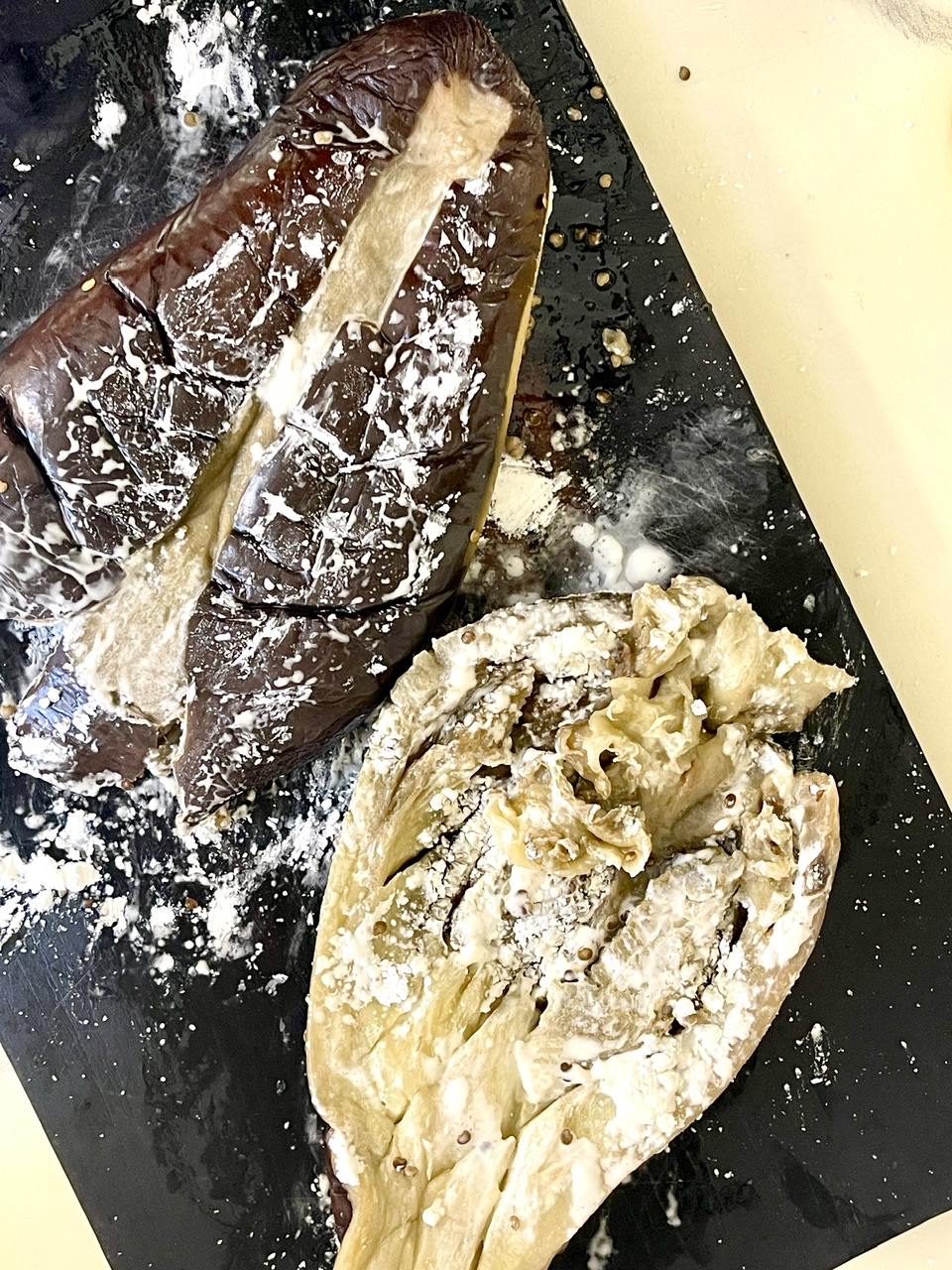
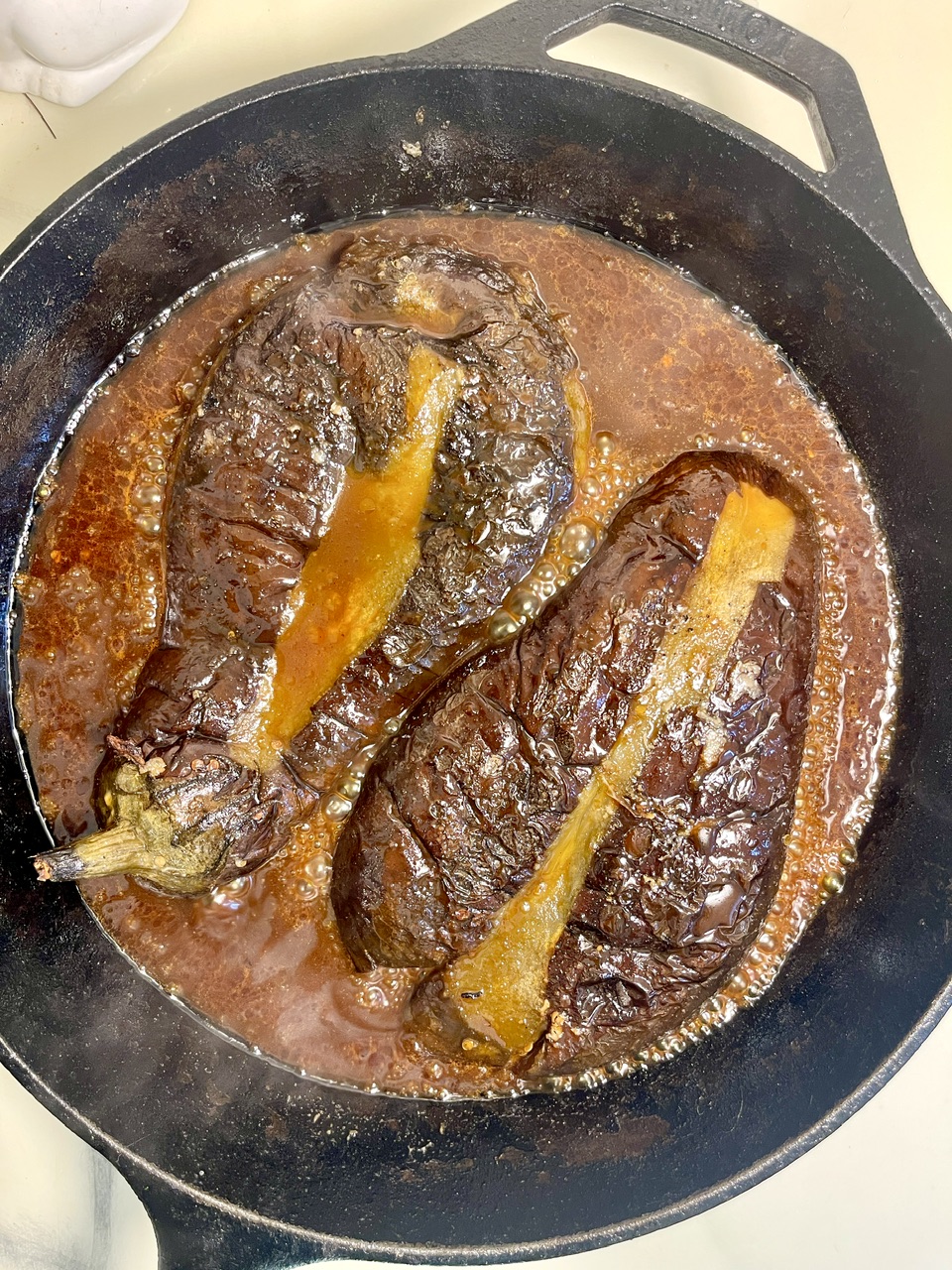
How to make eggplant unagi, step by step
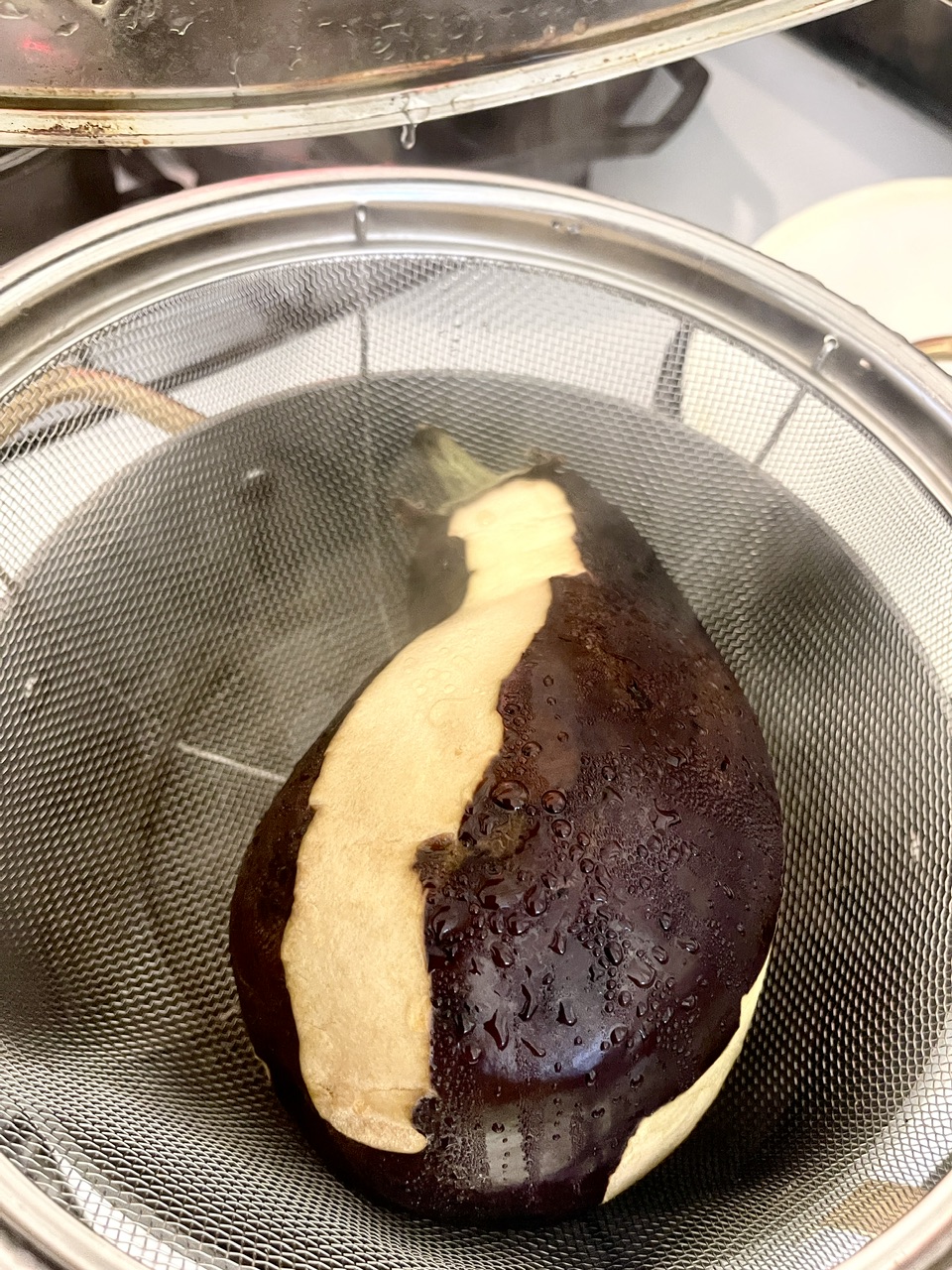
- Steam the eggplant. Trim the stems and steam the eggplants whole for 10 to 12 minutes, until completely soft and a chopstick slides through with no resistance. You can also wrap them loosely and microwave for 4 to 6 minutes.
- Cool and slice. Let them cool for a few minutes until you can handle them. Cut each eggplant lengthwise into thin slices, about ¼ inch thick. Handle gently, since they're very tender. (For the classic look, you can also split each eggplant open lengthwise and press it flat like a fillet.)
- Dredge in cornstarch. Pat the slices dry with a paper towel, then lightly coat both sides in cornstarch and tap off the excess.
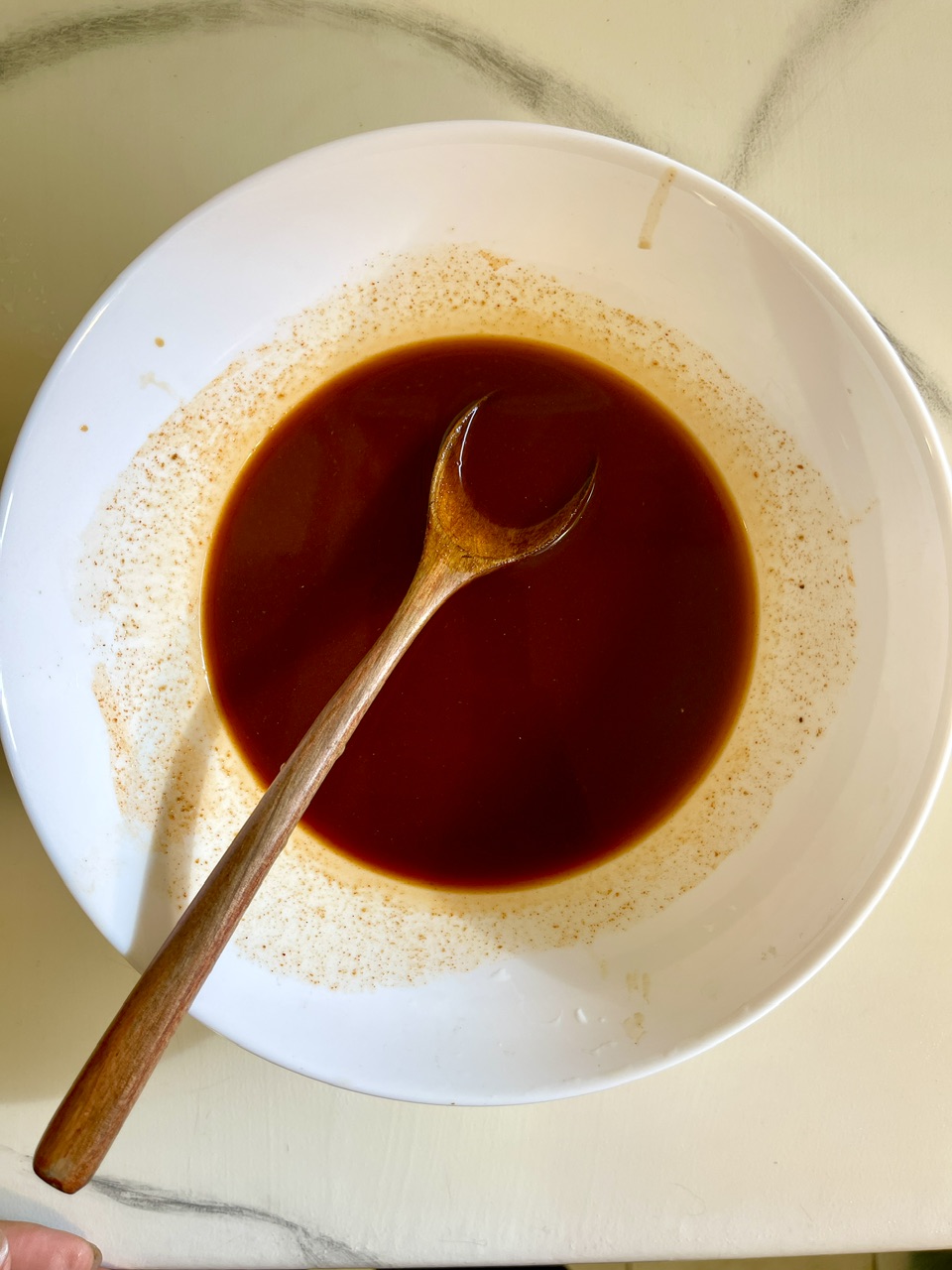
- Make the glaze. In a small bowl, whisk together the soy sauce, rice vinegar, water, and cornstarch until smooth. Now add any optional seasonings you like (sugar or maple, garlic, ginger, chili), taste, and adjust until it's exactly how you want it.
- Pan-fry until golden. Heat the neutral oil in a large nonstick skillet over medium-high heat. Fry the eggplant slices in a single layer for 2 to 3 minutes per side, until golden and crisp at the edges. Work in batches if needed.
- Glaze. Lower the heat to medium-low, give the glaze a stir, and pour it into the pan. Simmer for 30 to 60 seconds, gently turning the eggplant, until the sauce is thick, glossy, and coats every slice. Turn off the heat and drizzle in the sesame oil.
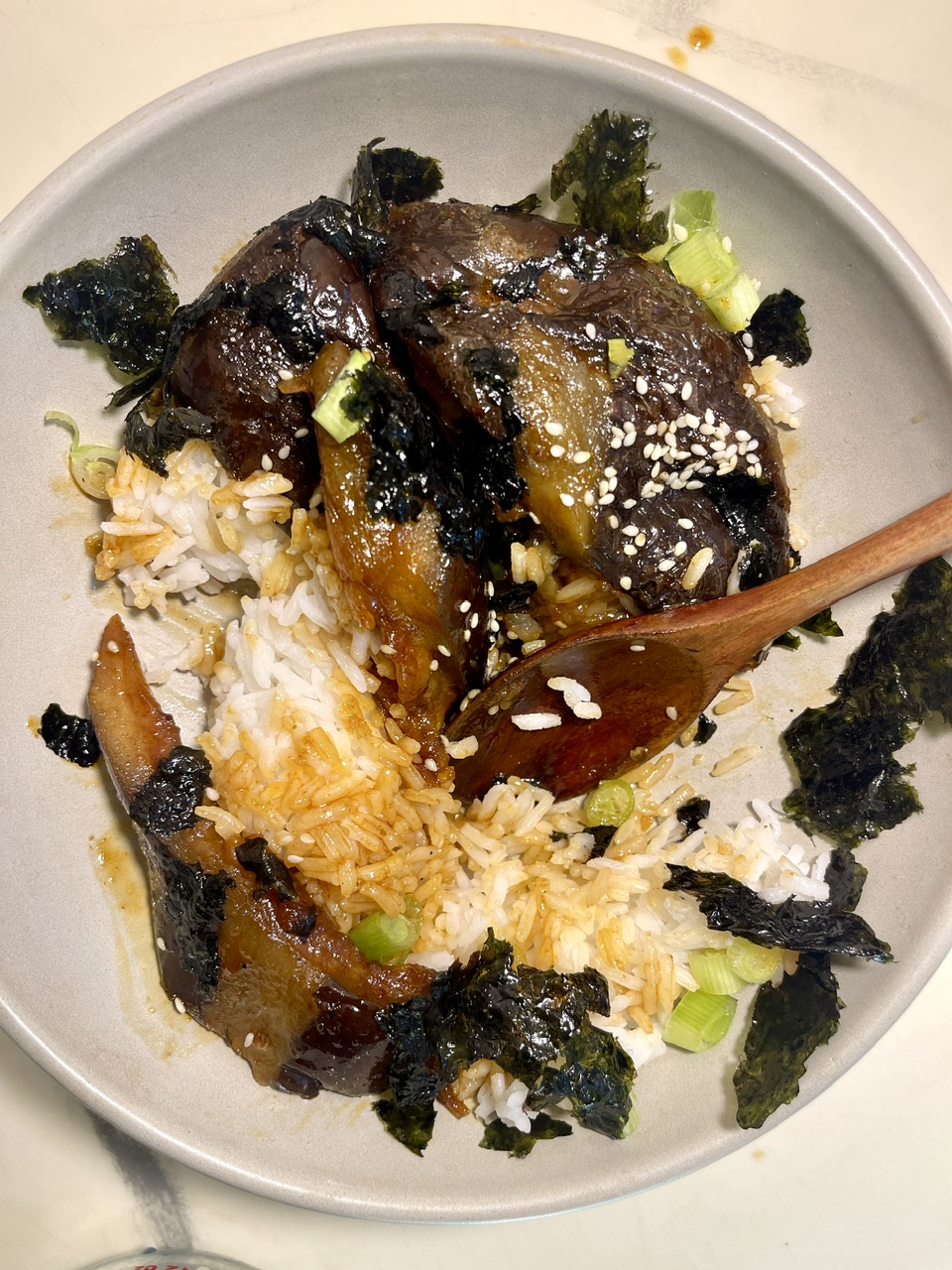
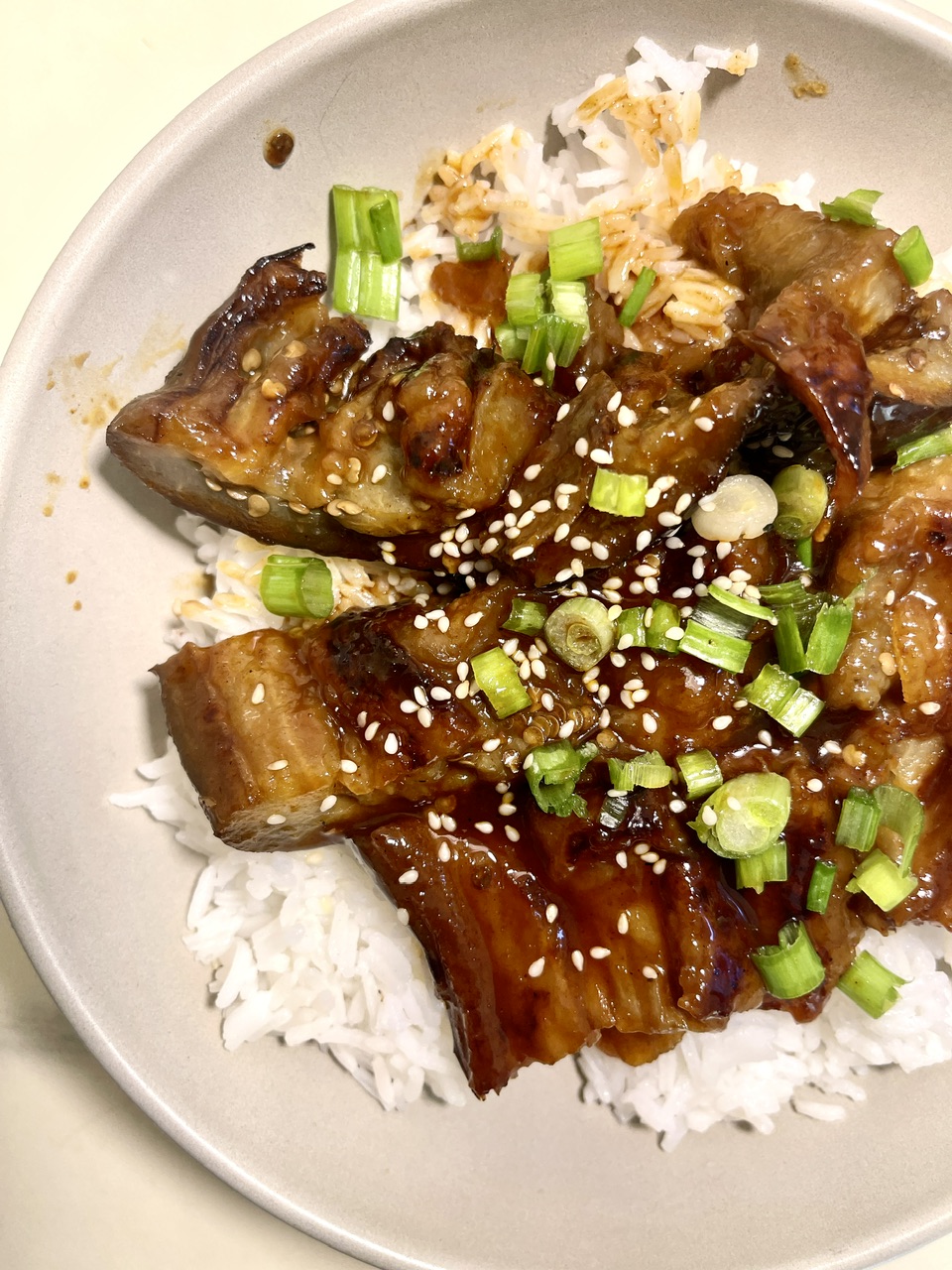
- Garnish and serve. Lay the eggplant over hot rice, spoon on any extra glaze, and finish with sesame seeds, nori flakes, and scallions.
Tips for the best vegan unagi
- Steam until truly soft. Undercooked eggplant turns spongy and soaks up oil. It should be completely tender, almost collapsing, before you slice it.
- Dry before dredging. Steamed eggplant releases moisture. Patting it dry helps the cornstarch stick and keeps the crust crisp.
- Use a nonstick or well-seasoned pan. Delicate slices can tear on stainless steel.
- Don't crowd the pan. Overcrowding steams the eggplant instead of crisping it.
- Glaze at the very end. The sauce thickens fast and can scorch, especially if you've added sugar. Keep the heat low once it hits the pan.
- Want char? After glazing, hit the slices with a kitchen torch or slide them under the broiler for a minute for that grilled kabayaki look.
Variations
- Spicy unagi: add a teaspoon of gochujang, sriracha, or a pinch of shichimi togarashi to the glaze.
- Unagi sushi rolls: lay strips of glazed eggplant on sushi rice and nori with cucumber and avocado for a vegan unagi roll or nigiri.
- Hitsumabushi style: chop the eggplant over rice, then enjoy the last third with hot dashi or green tea poured over it.
- Air fryer: after dredging, spray lightly with oil and air fry at 400°F (200°C) for 8 to 10 minutes, flipping halfway, then toss in the warmed glaze.
- Oven-baked: bake the dredged slices on a lined sheet at 425°F (220°C) for 15 to 18 minutes, brush with glaze, and broil 1 to 2 minutes.
- Filipino twist: swap the vinegar for calamansi juice and add a little extra garlic for an adobo-inspired glaze.
Substitutions
- Cornstarch: potato starch, tapioca starch, or arrowroot all work for both the dredge and the glaze.
- Soy sauce: tamari (gluten-free) or coconut aminos (soy-free; reduce the sugar since it's sweeter).
- Rice vinegar: apple cider vinegar or a squeeze of lemon or calamansi.
- Sweetener (if using): brown sugar, maple syrup, agave, coconut sugar, or 2 tablespoons of mirin in place of the sweetener and some of the water.
- Sesame oil: skip it or use a tiny drizzle of chili oil.
- Nori flakes: crumble a toasted nori sheet, use aonori, or furikake.
- Japanese eggplant: a globe eggplant works. Peel it if the skin is thick, slice into planks, and steam a few minutes longer.
What to serve with eggplant unagi
The classic way is a vegan unadon: glazed eggplant over a bowl of steamed short-grain rice with extra sauce drizzled on top. Add a side of quick-pickled cucumbers and a bowl of miso soup for a full Japanese-style meal.
Want to round out the table? It's great alongside our Vegan Butter Soy Rice, a crispy Japanese Tofu Steak, or Miso BBQ Glazed Accordion Tofu for extra protein. Leftovers make an amazing filling for vegan onigiri.
Storage and reheating
Store leftover eggplant unagi in an airtight container in the fridge for up to 3 days. Reheat in a skillet over medium-low heat with a splash of water to loosen the glaze, or in the air fryer at 375°F (190°C) for 3 to 4 minutes to bring back some crispness. The coating softens in the fridge, so it's best enjoyed fresh. We don't recommend freezing.
Vegan Eggplant Unagi (Eggplant Kabayaki)
Equipment
- Steamer basket
- Large nonstick skillet
Ingredients
Eggplant
- 2 medium Japanese eggplants about 1 lb / 450 g
- 3 tablespoon cornstarch for dredging
- 3 tablespoon neutral oil for pan-frying
Unagi glaze
- 3 tablespoon soy sauce or tamari for gluten-free
- 1 tablespoon rice vinegar
- ¼ cup water
- 1 teaspoon cornstarch
- 1 teaspoon toasted sesame oil
Optional seasonings (mix and match your own)
- 1 to 2 tablespoon brown sugar or maple syrup optional, for a classic sweet unagi flavor
- 1 clove garlic optional, grated, or ½ teaspoon garlic powder
- ½ teaspoon fresh ginger optional, grated, or ¼ teaspoon ground ginger
- pinch shichimi togarashi or red pepper flakes optional, for heat
To garnish
- 1 teaspoon toasted sesame seeds
- 1 tablespoon nori flakes or aonori
- 1 scallion thinly sliced, optional
- 2 cups cooked short-grain rice for serving
Instructions
- Trim the eggplant stems. Steam the eggplants whole for 10 to 12 minutes, until completely soft and a chopstick slides through easily.
- Let cool for a few minutes, then slice lengthwise into thin slices, about ¼ inch thick. Pat dry with a paper towel.
- Lightly dredge both sides of each slice in cornstarch and tap off the excess.
- Whisk the soy sauce, rice vinegar, water, and cornstarch in a small bowl until smooth. Add any optional seasonings you like, taste, and adjust until it's just how you want it.
- Heat the oil in a large nonstick skillet over medium-high heat. Pan-fry the eggplant in a single layer for 2 to 3 minutes per side until golden and crisp at the edges, working in batches if needed.
- Reduce heat to medium-low, stir the glaze, and pour it into the pan. Simmer 30 to 60 seconds, gently turning the eggplant, until thick and glossy. Turn off the heat and drizzle in the sesame oil.
- Serve over hot rice, spoon over extra glaze, and garnish with sesame seeds, nori flakes, and scallions.
Notes
Frequently asked questions
What does eggplant unagi taste like?
It tastes sweet, salty, and savory, like teriyaki with a deeper soy flavor. The steamed eggplant is soft and buttery, with crisp, sticky edges from the cornstarch and glaze, which closely mimics the rich texture of grilled eel.
Why do you steam the eggplant before frying?
Steaming cooks the eggplant all the way through so it becomes creamy and tender, and it collapses the spongy air pockets that normally soak up oil. The result is a silky, eel-like texture with much less oil.
Is eggplant unagi vegan?
Yes. This recipe uses only plants: eggplant, cornstarch, soy sauce, vinegar, sesame oil, seasonings, sesame seeds, and nori. Traditional unagi is made from freshwater eel, so this is a fully vegan alternative.
Is eggplant unagi gluten-free?
It can be. Regular soy sauce contains wheat, so use tamari or a certified gluten-free soy sauce. Cornstarch, eggplant, and the other ingredients are naturally gluten-free.
What kind of eggplant is best for vegan unagi?
Japanese or Chinese eggplants are best because they have thin skin, few seeds, and a creamy, sweet flesh. Their long shape also makes fillet-like slices that look like eel.
Can I make unagi sauce without mirin?
Yes. This glaze uses soy sauce, rice vinegar, and cornstarch for a glossy, sticky finish without mirin or sake. Add a little brown sugar or maple syrup if you want the classic sweet unagi flavor.
Can I make eggplant unagi in the air fryer?
Yes. Dredge the steamed slices in cornstarch, spray lightly with oil, and air fry at 400°F (200°C) for 8 to 10 minutes, flipping halfway. Toss with the warm glaze before serving.
How do you serve vegan unagi?
Serve it over steamed rice as a vegan unadon, in sushi rolls or nigiri, inside onigiri, or as a side dish with tofu and miso soup. Garnish with sesame seeds, nori flakes, and scallions.
More plant-based recipes you'll love
- Sticky Eggplant with Black Bean Garlic Sauce
- Baked Watermelon Tuna Teriyaki
- 30-Minute Roasted Eggplant Vegan Thai Green Curry
- Crispy Bachan's Tofu
- 27 Vegan Sicilian Eggplant Recipes
- Is Tofu Japanese?
Made this eggplant unagi? Leave a star rating and share your favorite glaze combination in the comments below. It really helps other plant-based cooks find the recipe. And tag @makepurethyheart so we can see your unadon bowls.

f8bef says
Honestly, I expected more fluff about just 'fun.' But seeing how they structure the user journey-it's almost like a system flow chart! The depth here suggests real thought behind the f8bef legit experience. Impressive framework design.