
Thai curry is a flavorful and aromatic dish loved by many. But if you're following a vegan diet, you might wonder: Is Thai curry vegan? The answer can vary depending on the ingredients used, especially when dining out at Thai restaurants or making it at home. Let's dive into what makes Thai curry vegan or not, and how you can enjoy this dish while sticking to a plant-based diet.
Quick answer: Thai curry is usually not vegan as traditionally made. Most red, green, yellow and panang curry pastes contain shrimp paste, and the curry is often seasoned with fish sauce. Coconut milk is vegan, so a Thai curry becomes fully vegan when you use a curry paste without shrimp paste, replace fish sauce with soy sauce or salt, and use tofu or vegetables. Always check paste labels, since recipes vary by brand.

The Basics of Thai Curry
Thai curries typically come in three main varieties: red curry, green curry, and yellow curry. The base of these curries usually includes a combination of curry paste, coconut milk, and various vegetables or proteins.
- Red curry paste is made with red chili peppers, garlic, lemongrass, and other spices.
- Green curry paste is similar but includes green chili peppers and more herbs.
- Yellow curry is milder and often has turmeric as the main ingredient, giving it a yellow hue.
Each type of curry has its unique flavor profile, and the paste is the key element in determining whether the curry is vegan or not.

Non-Vegan Ingredients in Traditional Thai Curries
One of the main concerns when it comes to vegan Thai curries is the use of shrimp paste. Traditional Thai curry pastes often contain shrimp paste, a common ingredient that gives the curry a deep umami flavor. Additionally, fish sauce is frequently used in Thai cooking, which is another non-vegan ingredient.
However, you can easily find or make vegan versions of Thai curry paste. Many store-bought curry pastes now offer vegan options, and you can always make your own by blending ingredients like red chili peppers, garlic, lemongrass, and soy sauce or coconut aminos in a food processor.
Vegan Thai Curry Checklist
Before you cook or order, check for these five things:
- Curry paste: no shrimp paste (kapi), dried shrimp or fish.
- Fish sauce: swap for soy sauce, tamari or salt.
- Oyster sauce: use a mushroom-based vegetarian stir-fry sauce.
- Protein: tofu, tempeh, chickpeas, mushrooms or vegetables instead of meat or seafood.
- Coconut milk: naturally vegan, so no swap needed.
Vegan Thai Curry at Restaurants
When dining at Thai restaurants, it's essential to ask if the curry paste and sauce are vegan. Some restaurants may use non-vegan ingredients like shrimp paste or fish sauce in their curries, while others might offer a vegan alternative.
If you're unsure, you can request the curry to be made with vegan ingredients only, such as tofu cubes instead of meat, and without fish sauce or shrimp paste. Thai basil, red bell pepper, green beans, baby corn, and bamboo shoots are common vegan-friendly ingredients that can be used to make a delicious Thai curry.

How to Make Vegan Thai Curry at Home
Making vegan Thai curry at home is a great way to ensure that your meal is entirely plant-based. Here's a quick guide to making your own vegan Thai curry:
- Choose your curry paste: Look for a vegan-friendly red, green, or yellow curry paste. You can find these in most grocery stores or make your own using simple ingredients.
- Cook the curry paste: Heat some coconut oil in a large skillet over medium heat. Add the curry paste and cook until fragrant, about 2-3 minutes.
- Add vegetables and protein: Add your choice of vegetables like red bell pepper, green beans, baby corn, and shiitake mushrooms. For protein, use tofu cubes or vegan tofu. Stir everything together over medium-high heatuntil the vegetables are tender.
- Add coconut milk: Pour in full-fat coconut milk and bring the mixture to a simmer over medium-low heat. Let it cook for about 10-15 minutes until the flavors meld together.
- Season and serve: Add soy sauce or coconut aminos for extra flavor, and finish with a squeeze of lime juice. Serve your curry over jasmine rice or cauliflower rice with lime wedges on the side.
- Store leftovers: If you have any leftovers, store them in an airtight container in the refrigerator. They should keep well for a few days.
Vegan Thai Curry Recipes to Try
If you're looking for specific recipes, here are some vegan Thai curry options to explore:

Thai & Mushrooms Tofu Curry

Red Curry With Mushrooms by Cooking with Nart
Wild Chicken Mushroom Thai Red Curry by Forager Chef
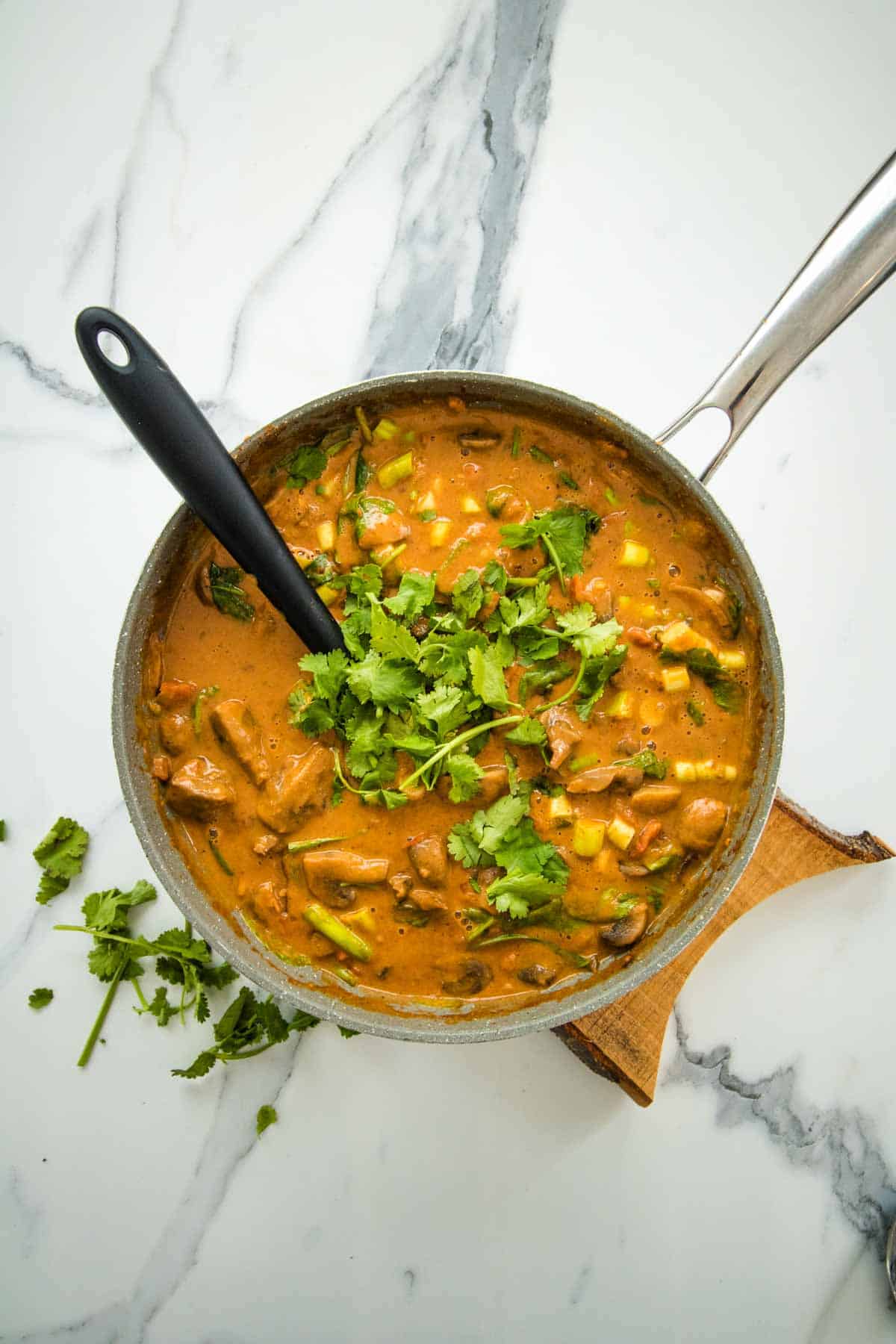
Satay Mushroom Curry With Coconut Milk by Tastefully Vikkie

Vegan Thai Red Curry with Bok Choy by Del's Cooking Twist

Easy Thai Oyster Mushroom Curry With Coconut Milk by Sabrina Currie
Vegan Thai Red Curry by Nora Cooks
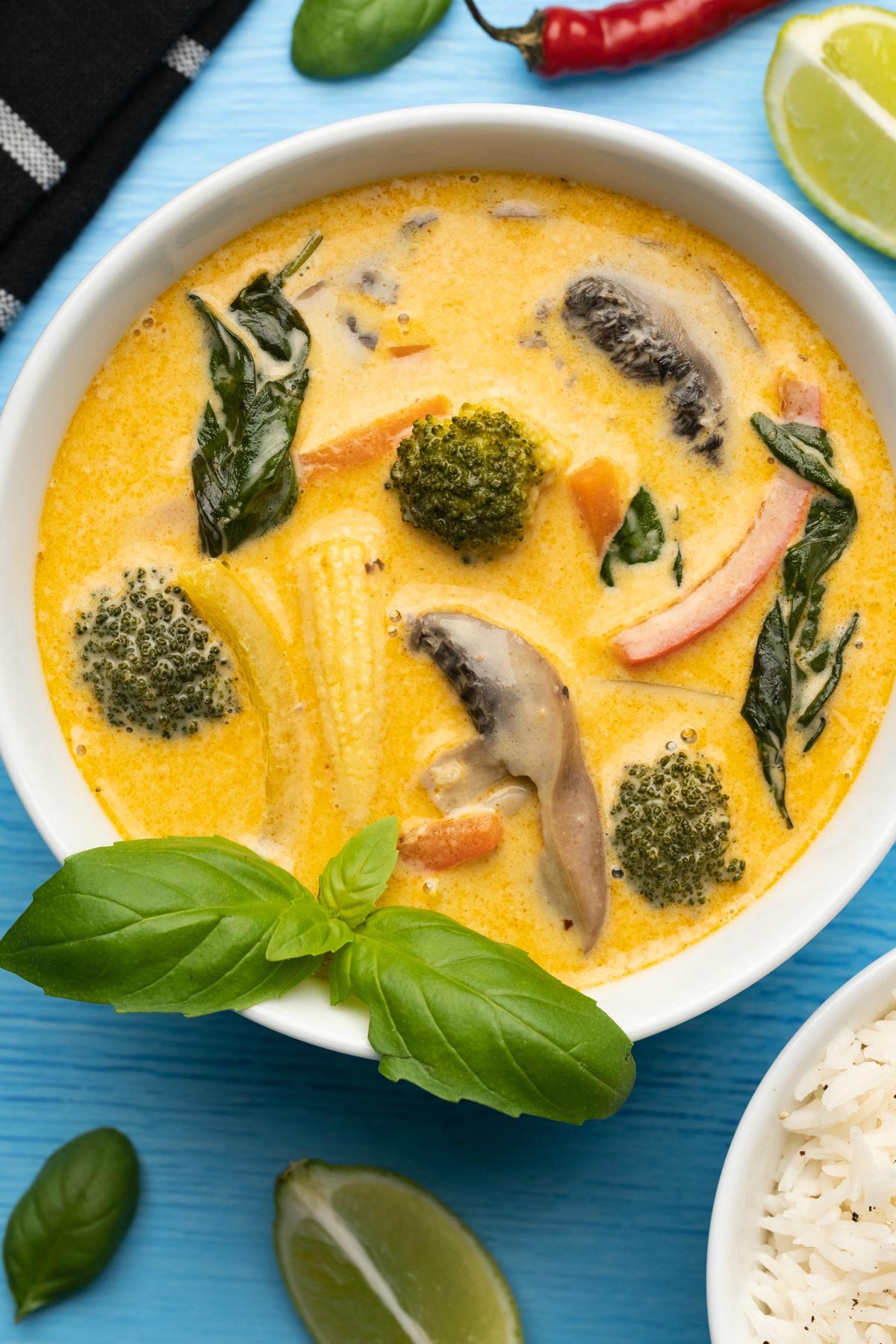
Vegan Thai Red Curry by Loving It Vegan

Creamy Coconut Mushroom Curry by Chloe

Vegan Thai Red Curry by Jessica
More Vegan Thai Curries From Our Kitchen
- Easiest Vegan Thai Mushroom and Tofu Curry
- 30-Minute Roasted Eggplant Vegan Thai Green Curry
- Tofu Meatballs in Thai Curry Sauce
- Mushroom Zucchini Coconut Curry
Is Thai Curry Vegan? FAQ
Usually not as served traditionally. Most Thai curry pastes contain shrimp paste, and many curries are seasoned with fish sauce and made with chicken or seafood. It is easy to make vegan Thai curry by using a curry paste without shrimp paste, soy sauce instead of fish sauce, and tofu or vegetables.
Many traditional red, green, yellow, panang and massaman curry pastes include shrimp paste (kapi). Some brands make pastes without it, so always check the ingredient list for shrimp paste, shrimp, fish or anchovy.
Yes. Coconut milk is made from coconut flesh and water, so it is naturally vegan and dairy-free.
Not usually. Green curry paste often contains shrimp paste, and the curry is typically seasoned with fish sauce. A vegan green curry uses a shrimp-free paste and soy sauce or salt instead.
Both are often made with shrimp paste and fish sauce, and massaman is traditionally cooked with meat. Ask for them without fish sauce and shrimp paste, or make them at home with a vegan paste.
Ask for tofu or vegetables, no fish sauce, no shrimp paste and no oyster sauce, and ask whether the curry paste is made in-house or from a jar that contains shrimp. Saying "jay" (Thai vegan) at some restaurants also helps.
Soy sauce or tamari with a squeeze of lime, a little seaweed or mushroom broth for umami, or a store-bought vegan fish sauce.
Yellow and red curries are often the easiest to adapt, but any Thai curry can be vegan if the paste has no shrimp paste and fish sauce is left out.
Conclusion
Thai curry can be vegan, but it often depends on the ingredients used, especially the curry paste. By being mindful of ingredients like shrimp paste and fish sauce, you can enjoy delicious vegan Thai curries both at home and in restaurants. Whether you’re making a vegan Thai red curry recipe or trying a new dish at your favorite Thai restaurant, vegan options abound. Just remember to check the ingredients and savor the delicious flavors of Thai cuisine!