

Quick answer: Vegan budae jjigae is a plant-based take on Korean army base stew. Simmer kimchi, shiitake, onion and garlic in broth with gochujang and gochugaru, then add vegan sausage, firm tofu, beans, udon and a slice of vegan cheese. It's spicy, hearty, ready in about 40 minutes and serves four.
Welcome to a delightful journey into the world of vegan Korean cuisine! Today, we're diving into the rich flavors of Budae Jjigae, a beloved Korean stew with a plant-based twist. In this vegan adaptation, we're bringing together traditional Korean ingredients in a meatless rendition of the famous Army Base Stew. Get ready to tantalize your taste buds and explore the fusion of flavors in this Vegan Korean Budae Jjigae recipe.

What is Budae Jjigae?
Budae Jjigae, also known as "Army Base Stew" or "Korean Army Stew," is a popular Korean stew that originated during the aftermath of the Korean War in the 1950s. This unique dish has a fascinating history rooted in the scarcity of food after the war, which led to the creation of a dish combining various surplus ingredients from U.S. military bases with Korean flavors.
Budae Jjigae is often prepared in a large pot or pan placed at the center of the dining table, allowing everyone to cook and enjoy the stew together. Over time, this dish has evolved, and various versions or adaptations have emerged, including vegetarian or vegan renditions that replace meat with plant-based alternatives while maintaining the dish's signature flavors.
The stew is cooked in a spicy and flavorful broth made with gochujang (Korean red chili paste), gochugaru (Korean red chili flakes), soy sauce, and other seasonings. The combination of these ingredients results in a hearty, spicy, and savory stew that's perfect for communal dining.
The dish typically includes an assortment of ingredients such as:
- Sausages or hot dogs
- Spam or other processed meats
- American Cheese
- Baked beans
- Kimchi
- Tofu
- Vegetables like onions, scallions, and mushrooms
- Instant noodles
In this vegan adaptation, we're bringing together traditional Korean ingredients in a meatless rendition of the famous Army Base Stew. Get ready to tantalize your taste buds and explore the fusion of flavors in this Vegan Korean Budae Jjigae recipe.
This recipe substitutes traditional ingredients like meat and processed foods with plant-based alternatives, keeping the essence and flavors of the original dish.
More Korean Recipes to Try
- Vegan Gilgeori Toast (Korean Street Toast)
- Vegan Korean Style Mapo Tofu (Mapadubu) Recipe
- Quick & Easy Spicy Korean-Style Enoki Mushrooms
- Easy Vegan Korean japchae
- Garlicky Creamy Vegan Gochujang Mac & Cheese
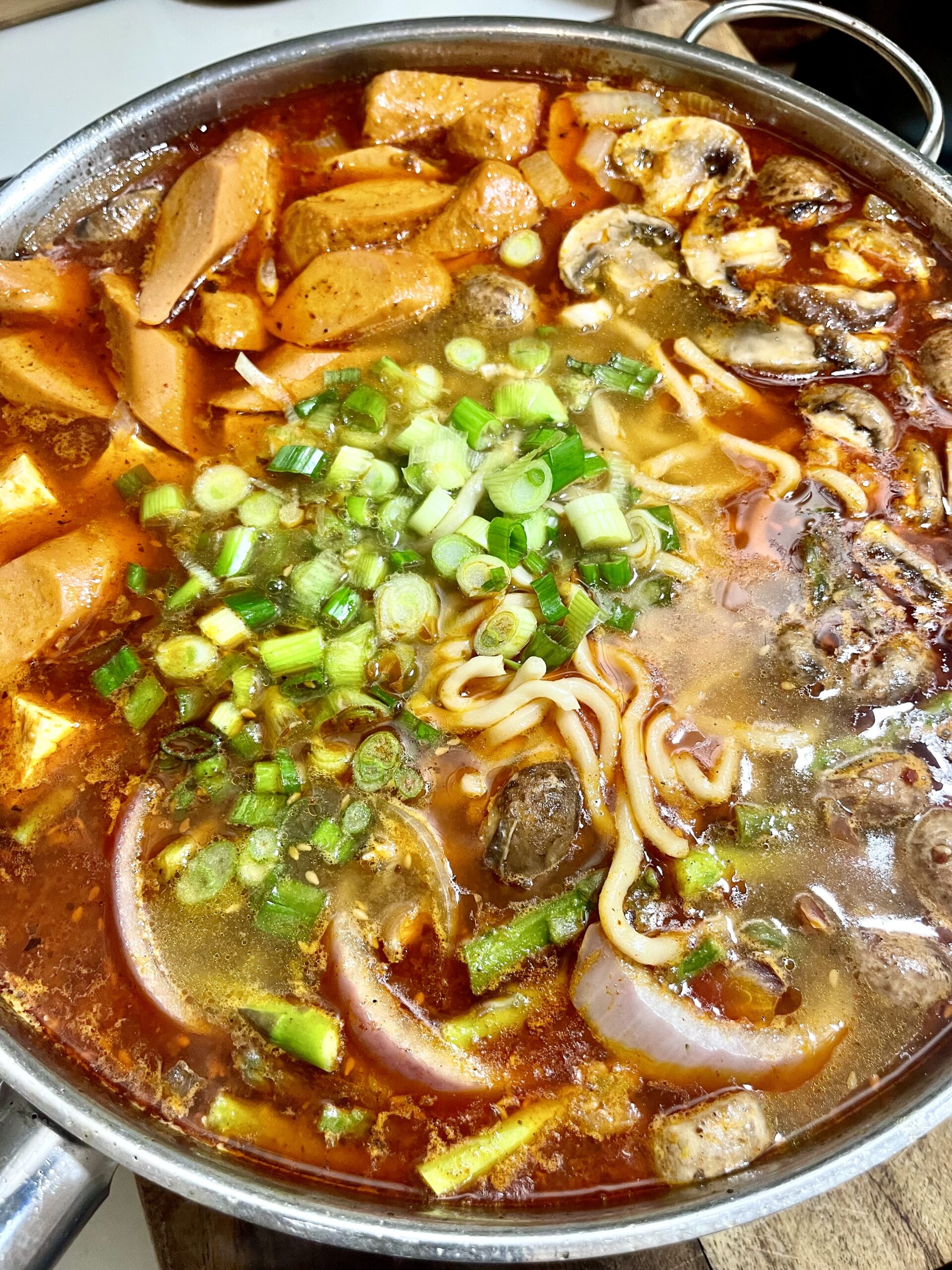
In this vegan adaptation, we're bringing together traditional Korean ingredients in a meatless rendition of the famous Army Base Stew. Get ready to tantalize your taste buds and explore the fusion of flavors in this Vegan Korean Budae Jjigae recipe.

Ingredients:
- 1 tablespoon sesame oil
- 1 onion, thinly sliced
- 3 cloves garlic, minced
- 1 cup sliced shiitake mushrooms
- 1 cup sliced vegan hot dogs or vegan sausage
- 1 cup vegan kimchi, chopped
- 4 cups vegetable broth or water (Trader Joe’s Miso Ginger Broth)
- 2 tablespoons gochujang (Korean red pepper paste)
- 2 tablespoons gochugaru (Korean red pepper flakes)
- 1 tablespoon soy sauce or tamari
- 1 cup firm tofu, cubed
- 1 cup canned baked beans or chickpeas (optional) I used Heyday Sesame Kimchi
- Asparagus
- 2 green onions, chopped (for garnish)
- 2 pack udon (check for vegan options)
- Salt and pepper to taste
- 3 Slices Vegan cheese
Instructions:
- Heat sesame oil in a large pot or deep skillet over medium heat. Add sliced onion and garlic, sauté until fragrant and onions become translucent.
- Add sliced carrots, shiitake mushrooms, vegan hot dogs, and vegan kimchi. Cook for about 5 minutes until the vegetables begin to soften.
- Pour in vegetable broth (or water) and bring the mixture to a simmer.
- Add gochujang, gochugaru, and soy sauce (or tamari). Stir well to combine all the flavors.
- Add firm tofu cubes and canned baked beans or chickpeas if using. Stir gently to incorporate.
- Toss in the sliced cabbage or Napa cabbage. Let it simmer for about 10-15 minutes until the vegetables are tender and the flavors have melded.
- Meanwhile, cook the instant ramen noodles separately according to the package instructions. Drain and set aside.
- Taste the stew and adjust seasoning with salt and pepper as needed.
- To serve, place a portion of cooked ramen noodles into individual serving bowls. Ladle the hot stew over the noodles.
- Garnish with chopped green onions and serve hot.
Note: Budae Jjigae is a flexible dish, so feel free to add or substitute ingredients based on your preferences or availability. Some variations include adding vegan cheese, sliced potatoes, or different vegetables.


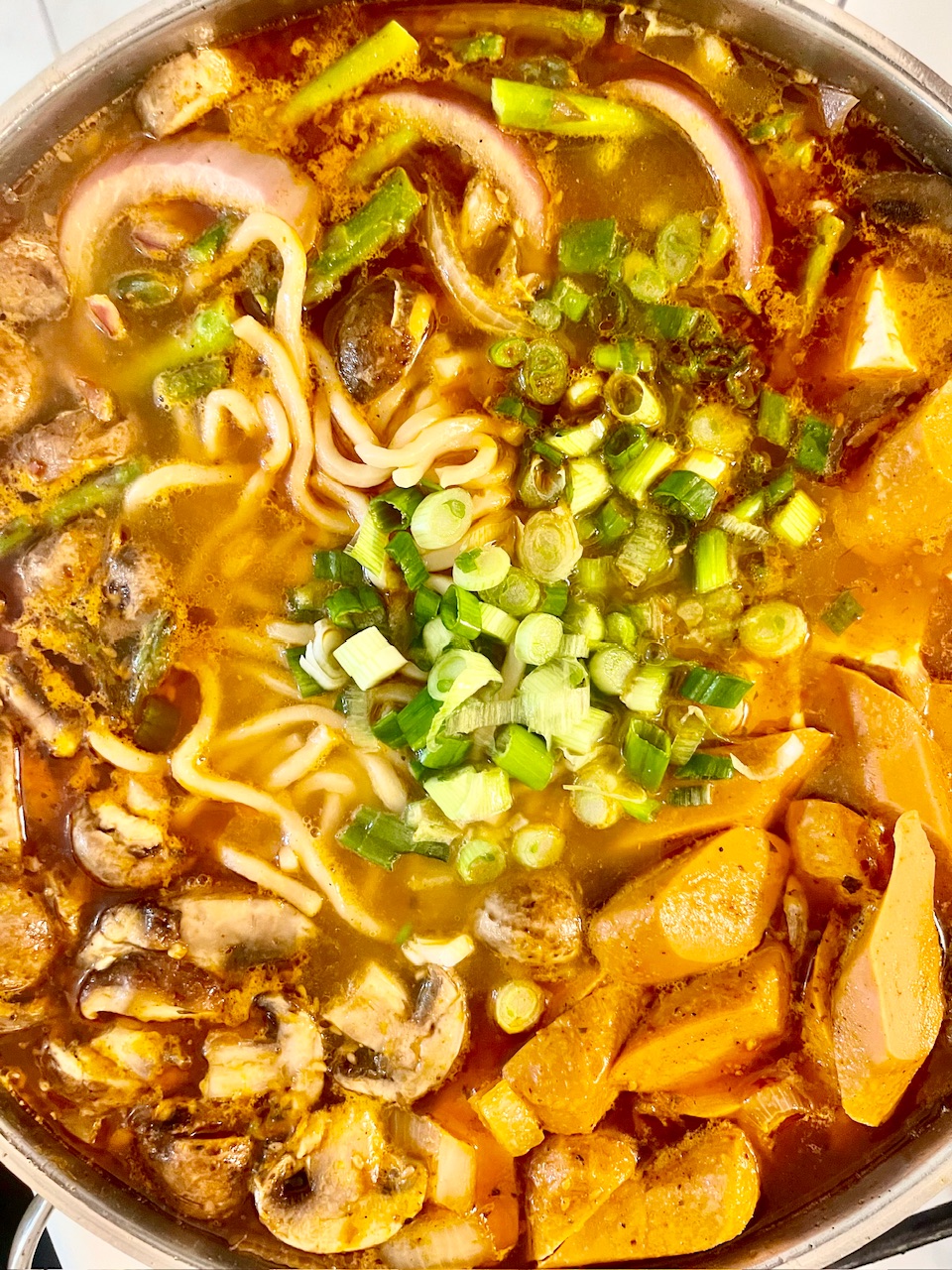
The Vegan Korean Budae Jjigae recipe offers a glimpse into the diverse and inclusive world of Korean cuisine. With its tantalizing flavors, this dish pays homage to tradition while embracing the principles of plant-based living. Join us in celebrating this fusion of taste and culture, making your mealtime both delicious and compassionate.
The stew is cooked in a spicy and flavorful broth made with gochujang (Korean red chili paste), gochugaru (Korean red chili flakes), soy sauce, and other seasonings. The combination of these ingredients results in a hearty, spicy, and savory stew that's perfect for communal dining.
Budae Jjigae is often prepared in a large pot or pan placed at the center of the dining table, allowing everyone to cook and enjoy the stew together. Over time, this dish has evolved, and various versions or adaptations have emerged, including vegetarian or vegan renditions that replace meat with plant-based alternatives while maintaining the dish's signature flavors.
This stew holds cultural significance in Korea, symbolizing adaptability, innovation, and the blending of culinary influences during a challenging period in the country's history. Today, it remains a popular and beloved comfort food among Koreans and is also appreciated by many worldwide for its unique taste and history.
Substitutions
Meat Substitutes: Instead of traditional meat products like sausages, Spam, or hot dogs, you can use plant-based alternatives. Consider using vegan sausages, tempeh, tofu, seitan, or textured vegetable protein (TVP) as meat substitutes.
Vegetarian/Vegan Options: To make a vegetarian or vegan Budae Jjigae, skip the meat entirely or use meat alternatives mentioned above. Focus on adding more vegetables, tofu, or beans for protein. You can add more mushrooms, cabbage, bell peppers, or zucchini to enhance the dish's flavors and textures.
Broth: For the broth, instead of a meat-based broth, use vegetable broth or water flavored with Korean seasonings like gochujang, gochugaru, soy sauce, and other spices. This helps maintain the dish's authentic Korean taste.
Noodles: If you prefer gluten-free options or want to avoid regular instant noodles, opt for rice noodles, sweet potato noodles (glass noodles), or other gluten-free alternatives available in Asian markets.
Kimchi: For vegan or vegetarian versions, ensure you use kimchi that doesn't contain any fish or seafood-based ingredients. Some brands produce vegan kimchi that's free from fish sauce or shrimp paste.
Additional Ingredients: Feel free to add or swap other ingredients based on personal preferences or dietary needs. Consider adding more vegetables like spinach, kale, or bok choy, or experimenting with different spices and seasonings to tailor the stew to your taste.
Variations
Bean-Based Protein: Besides tofu, incorporate various beans for added protein. Use kidney beans, black beans, or chickpeas to provide texture and substance to the stew.- Mushroom Medley: Mushrooms are a fantastic meat substitute. Combine different mushroom varieties like oyster mushrooms, portobello mushrooms, or king oyster mushrooms to mimic a meaty texture and enhance the umami flavor.
- Vegan Sausages and Hot Dogs: Opt for plant-based sausages or hot dogs available in the market. You can find a variety of vegan alternatives made from soy, seitan, or vegetables that closely resemble the original meat products.
- Vegan Kimchi: Ensure your kimchi is vegan-friendly by checking the ingredients. Some traditional kimchi recipes may contain fish sauce or shrimp paste, so look for kimchi labeled specifically as vegan or make your own vegan kimchi.
- Seitan or Tempeh: Utilize seitan or tempeh as additional meat alternatives in the stew. They soak up flavors well and provide a chewy texture similar to meat.
- Coconut Milk Creaminess: For a creamier stew without dairy, add a small amount of coconut milk towards the end of cooking. It adds richness and a hint of sweetness to balance the spiciness.
- Vegan Cheese or Nutritional Yeast: Use vegan cheese alternatives or sprinkle nutritional yeast into the stew for a cheesy flavor. This adds a savory element to the dish.
- Custom Vegetable Additions: Increase the vegetable content by adding more veggies like bell peppers, spinach, kale, or even sweet potatoes for a nutrient-packed stew.
- Gluten-Free Noodle Alternatives: If you're gluten-sensitive or following a gluten-free diet, consider using rice noodles, buckwheat noodles, or mung bean noodles as alternatives to regular wheat-based instant noodles.
- Asian-Inspired Seasonings: Incorporate other Asian seasonings like miso paste or Thai curry paste for an interesting twist, maintaining the stew's umami and depth of flavor.
Experimenting with different plant-based ingredients allows for a diverse range of vegan Budae Jjigae variations. By utilizing various substitutes and combining flavorful vegan elements, you can create a delicious, cruelty-free version of this Korean stew while keeping it true to its origins.
Vegan Budae Jjigae FAQ
Vegan budae jjigae is a plant-based version of Korean army base stew. Kimchi, gochujang and gochugaru make a spicy broth for vegan sausage, firm tofu, shiitake mushrooms, beans and udon, finished with a slice of melty vegan cheese.
Budae means military base. The stew took shape near U.S. Army bases in Korea after the Korean War, when cooks combined surplus ingredients from the bases with kimchi and gochujang.
Sliced vegan hot dogs or vegan sausage bring the smoky, salty bite, and cubed firm tofu adds extra protein.
Spicy and warming, thanks to 2 tablespoons each of gochujang and gochugaru. For a gentler pot, start with 1 tablespoon of each and add more to taste.
This recipe uses udon for thick, chewy noodles. Instant ramen noodles are the classic choice; pick a brand labeled vegan.
Yes. Make the broth with the vegetables, tofu and sausage up to 3 days ahead and keep it in the fridge. Reheat to a simmer and add the noodles and cheese right before serving so the noodles stay springy.
Yes. Vegan sausage, tofu and beans give each of the 4 servings an estimated 22 grams of protein.
Vegan Korean Budae Jjigae Recipe (Army Base Stew)
Ingredients
- 1 onion thinly sliced
- 3 cloves garlic minced
- 1 cup sliced shiitake mushrooms
- 1 cup sliced vegan hot dogs or vegan sausage
- 1 cup vegan kimchi chopped
- 4 cups vegetable broth or water Trader Joe’s Miso Ginger Broth
- 2 tablespoons gochujang Korean red pepper paste
- 2 tablespoons gochugaru Korean red pepper flakes
- 1 tablespoon soy sauce or tamari
- 1 cup firm tofu cubed
- 1 cup canned baked beans or chickpeas optional I used Heyday Sesame Kimchi
- Asparagus
- 2 green onions chopped (for garnish)
- 2 pack udon check for vegan options
- Salt and pepper to taste
- 3 Slices Vegan cheese
Instructions
- Heat sesame oil in a large pot or deep skillet over medium heat. Add sliced onion and garlic, sauté until fragrant and onions become translucent.
- Add sliced carrots, shiitake mushrooms, vegan hot dogs, and vegan kimchi. Cook for about 5 minutes until the vegetables begin to soften.
- Pour in vegetable broth (or water) and bring the mixture to a simmer.
- Add gochujang, gochugaru, and soy sauce (or tamari). Stir well to combine all the flavors.
- Add firm tofu cubes and canned baked beans or chickpeas if using. Stir gently to incorporate.
- Toss in the sliced cabbage or Napa cabbage. Let it simmer for about 10-15 minutes until the vegetables are tender and the flavors have melded.
- Meanwhile, cook the instant ramen noodles separately according to the package instructions. Drain and set aside.
- Taste the stew and adjust seasoning with salt and pepper as needed.
- To serve, place a portion of cooked ramen noodles into individual serving bowls. Ladle the hot stew over the noodles.
- Garnish with chopped green onions and serve hot.



Comments
No Comments