

There is something I really like about building a meal around couscous: you can start with a simple bowl of grains and turn it into something that tastes layered, bright and completely different depending on what you add.
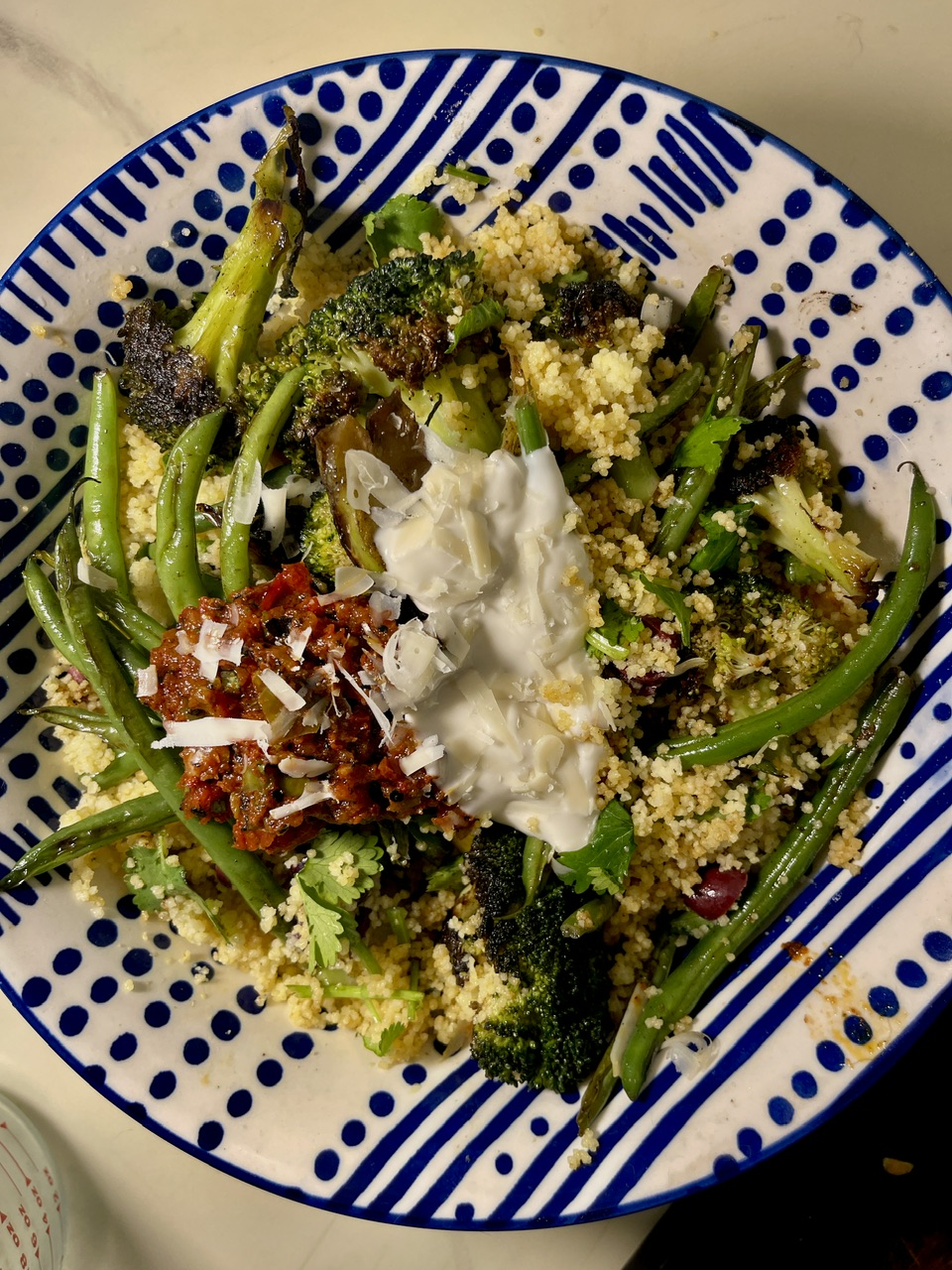
For this Mediterranean couscous, I went all in on those salty, briny, lemony flavors. The couscous gets tossed with herbs, lemon, soy sauce, spices and olive oil, then loaded with capers, olives, sun-dried tomatoes and preserved lemon.
On top, I added green beans and broccoli that are seared until browned, then deglazed with a splash of wine. Everything gets finished with vegan yogurt, lemon and vegan Parmesan, plus a spicy vegan paste I picked up from a Mediterranean market.
The result is somewhere between a grain bowl, a warm Mediterranean salad and a very easy weeknight dinner.
And the best part? You don't need every ingredient to make this work. The real recipe is the formula.
What is Mediterranean couscous?
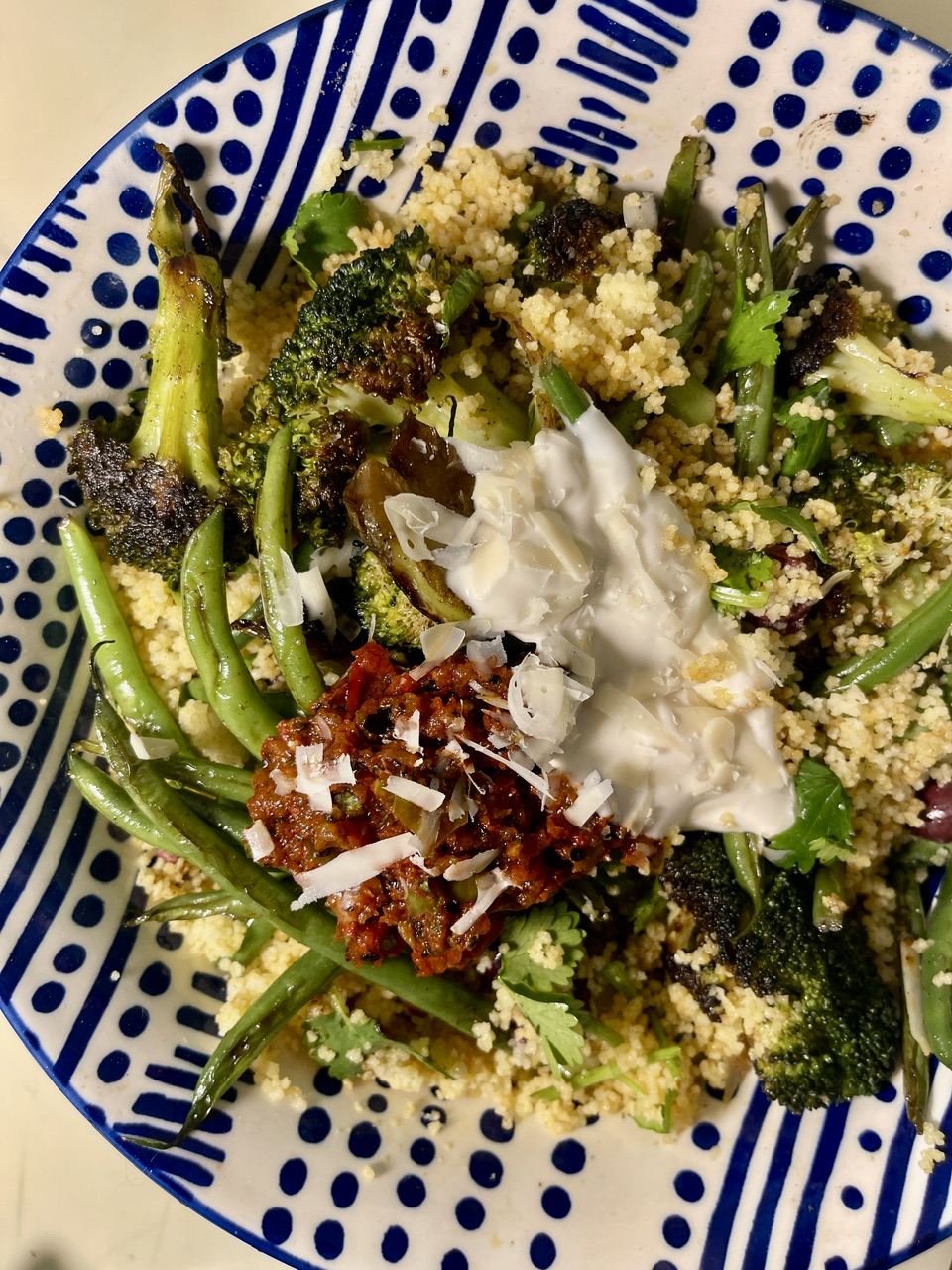
Mediterranean couscous is couscous combined with ingredients commonly associated with Mediterranean cooking, such as olive oil, lemon, fresh herbs, olives, capers, tomatoes and vegetables.
This version takes that idea and turns it into a complete vegan meal by combining herby couscous with seared green beans and broccoli, creamy vegan yogurt, vegan Parmesan and a spicy Mediterranean condiment.
It is fresh, savory, briny, creamy and a little spicy all at once.
How do you make Mediterranean couscous?
Make the couscous first, then season it while it is still warm so it absorbs the lemon, olive oil, herbs and spices. Meanwhile, sear the green beans and broccoli until browned, deglaze the pan with wine, and season everything generously. Assemble the couscous with the vegetables, then finish with vegan yogurt, lemon, vegan Parmesan and a spicy Mediterranean paste.
That's really the whole idea: flavor the couscous, aggressively sear the vegetables, then finish with something creamy, salty, acidic and spicy.
This Recipe at a Glance
Time: About 35 minutes
Serves: 4
Flavor: Lemon-forward, briny, herby, savory and spicy
Texture: Fluffy couscous, crisp-tender vegetables and creamy toppings
Diet: Vegan
Best for: An easy weeknight dinner, meal prep, or a Mediterranean-inspired lunch bowl
Why You'll Love This Mediterranean Couscous
It is much more flavorful than plain couscous. The couscous itself gets seasoned with lemon, herbs, soy sauce, olive oil and spices before anything else goes on top.
The vegetables actually taste like something. Instead of simply steaming the broccoli and green beans, you sear them hard enough to develop some color and flavor.
It has layers of acidity. Fresh lemon and preserved lemon give you two very different kinds of brightness.
The creamy finish changes everything. Vegan yogurt softens the salty, spicy ingredients and makes the couscous feel more substantial.
You can make it your own. Don't have green beans? Use zucchini. No preserved lemon? Add extra lemon zest. Don't have vegan Parmesan? Nutritional yeast works beautifully.
And if you have a favorite spicy Mediterranean condiment sitting in the refrigerator, this is exactly the kind of recipe where you should use it.
The Formula
This is the part I would remember if you make this recipe again without looking at the recipe card.
Fluffy grain + seared vegetables + something briny + something acidic + fresh herbs + creamy finish + heat.
For this particular bowl, that means:
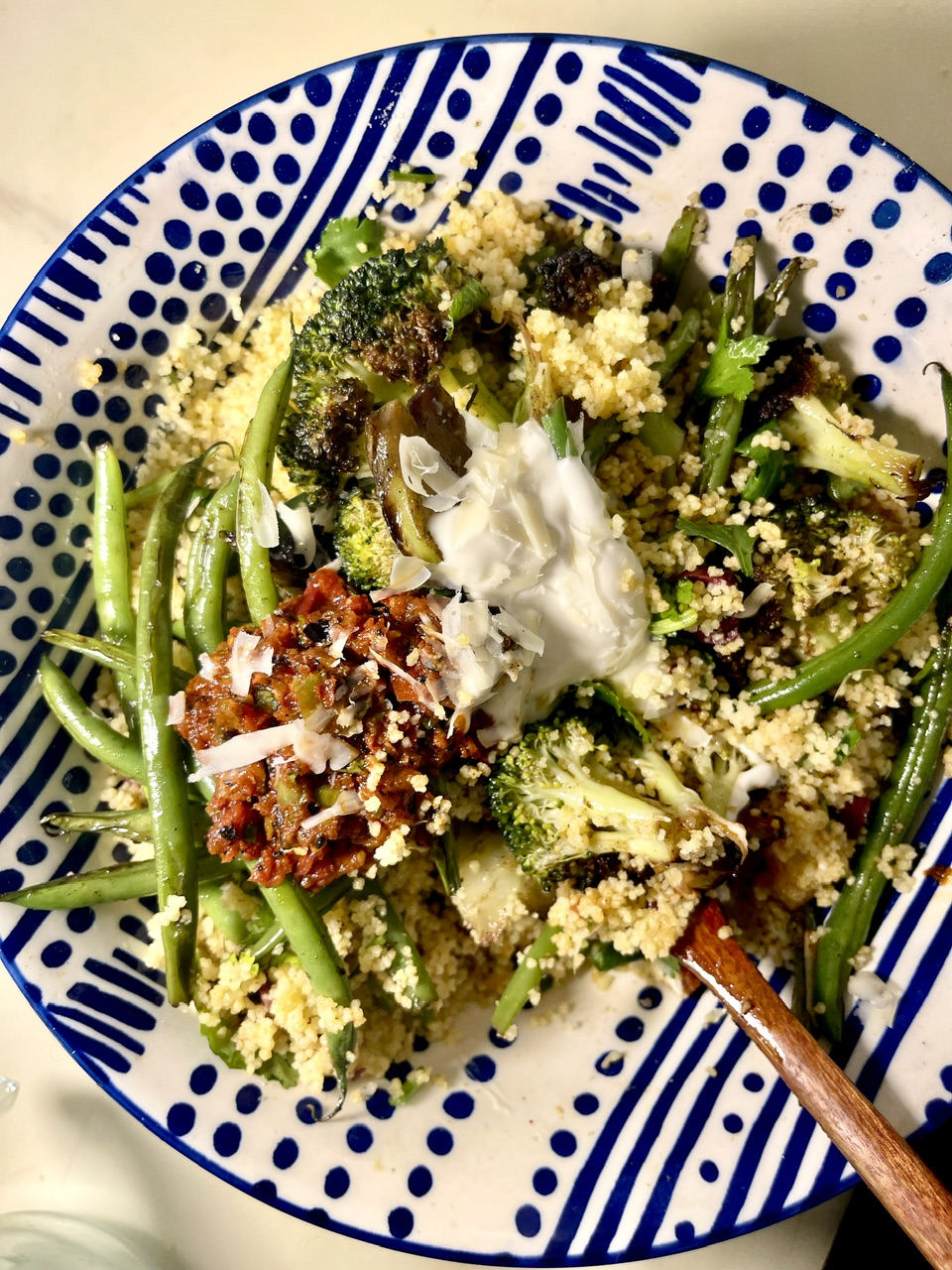
Couscous + green beans + broccoli + olives + capers + sun-dried tomatoes + preserved lemon + fresh lemon + parsley + vegan yogurt + vegan Parmesan + spicy paste.
You don't have to reproduce every ingredient.
The important thing is to keep the balance.
If the couscous tastes flat, add acid or salt. If it tastes too sharp, add olive oil or vegan yogurt. If everything feels soft, add something briny or crunchy. If it needs personality, add the spicy paste.
That's how you turn a basic couscous dinner into something that tastes intentional.
Key Ingredients
Couscous
Use regular couscous for the quickest version. Because couscous cooks so quickly, this recipe can come together without the long cooking time associated with many grain bowls.
The important part is seasoning it after cooking. Warm couscous is extremely good at absorbing olive oil, lemon and herbs.
Green Beans
The green beans bring freshness and a little snap. I like searing them rather than simply boiling them because the browned edges give the finished dish more contrast.
Broccoli
Broccoli makes the couscous feel like an actual dinner rather than a side dish. Get the florets into a hot pan and let them develop some color before stirring too much.
Preserved Lemon
This is one of the ingredients that makes the couscous taste distinctly Mediterranean-inspired. Preserved lemon is salty, intensely citrusy and much more concentrated than fresh lemon.
Use it sparingly at first, especially if your olives, capers and soy sauce are already salty.
Olives & Capers
These are your briny ingredients. They add that punchy, salty flavor that makes the couscous exciting.
Sun-Dried Tomatoes
Sun-dried tomatoes bring sweetness and concentrated tomato flavor. They also give the couscous a chewy texture that works nicely against the vegetables.
Fresh Herbs & Parsley
Fresh herbs keep the dish from becoming too heavy. Parsley is particularly good here because it adds freshness without competing with the lemon, olives and preserved lemon.
Vegan Yogurt
A spoonful of vegan yogurt creates a creamy contrast against all those salty, acidic flavors. You can either dollop it over the finished couscous or spread it across the plate and pile the couscous on top.
Vegan Parmesan
The vegan cheese gives the finished dish another savory layer. Nutritional yeast can also work if that's what you have.
Spicy Mediterranean Paste
This is the wildcard ingredient.
I used a spicy vegan paste from a Mediterranean market, but this is a place where you can improvise. Use whatever spicy Mediterranean condiment you enjoy and have available.
Start with a little. You can always add more at the table.
How to Make Mediterranean Couscous with Green Beans & Broccoli
1. Make and season the couscous
Prepare the couscous according to the package directions, then fluff it while it is still warm. Toss it with olive oil, lemon juice, herbs, parsley, soy sauce and your preferred spices. Fold in chopped capers, olives, sun-dried tomatoes and preserved lemon, tasting as you go so the couscous is already delicious before the vegetables are added.
2. Sear the green beans
Heat olive oil in a large skillet over medium-high heat and add the green beans. Season with salt and your preferred spices, then let them cook long enough to develop browned spots while remaining crisp-tender. Don't constantly move them around; giving them contact with the hot pan is what creates that good seared flavor.
3. Add and sear the broccoli
Add the broccoli to the same pan and continue cooking until the florets develop some color. Season again as needed, remembering that the couscous already contains salty ingredients like soy sauce, olives, capers and preserved lemon. You're looking for vegetables that are browned on the outside but still have some texture.
4. Deglaze with wine
Once the vegetables are nicely seared, pour in a splash of wine and scrape up the flavorful browned bits from the bottom of the pan. Let the wine reduce for a minute or two, then taste the vegetables and adjust the seasoning. This quick deglazing step gives the broccoli and green beans another layer of flavor without requiring a complicated sauce.
5. Assemble the couscous
Spoon the seasoned couscous onto a large platter or individual bowls and arrange the seared green beans and broccoli over the top. Add generous spoonfuls of vegan yogurt, then finish with fresh lemon, vegan Parmesan and chopped herbs. The goal is to keep the different components visible rather than mixing everything into one uniform bowl.
6. Finish with heat and olive oil
Spoon the spicy Mediterranean paste over the couscous wherever you want the heat, then drizzle everything with good olive oil. Finish with another squeeze of lemon and a little more parsley or vegan Parmesan if desired. Serve warm or at room temperature, which makes this recipe especially useful for lunches, gatherings and make-ahead meals.
Kitchen Technique: Don't Underseason Your Couscous
The biggest mistake with couscous is treating it like a blank side dish.
Couscous is mild, so it needs help.
Instead of relying on a sauce at the end, I like to build flavor directly into the couscous while it is warm.
Start with olive oil and lemon.
Then add herbs.
Then something salty and savory, such as soy sauce.
Then add briny ingredients like olives and capers.
Finally, add something concentrated like preserved lemon or sun-dried tomatoes.
By the time you add the vegetables, the couscous should already taste good.
That's what makes the finished dish feel layered instead of like vegetables sitting on top of plain couscous.
A Busy-Person Hack
Make the couscous and vegetable mixture separately and store them in the refrigerator.
When you're ready to eat, warm the couscous, quickly reheat the vegetables in a skillet and add the fresh toppings afterward.
Keep the vegan yogurt, lemon, herbs and spicy paste separate until serving.
That way, the leftovers don't become one soft, overly mixed bowl.
Variations & Substitutions
Make it gluten-free
Use a certified gluten-free grain such as quinoa or rice instead of couscous, and replace the soy sauce with tamari if needed.
Use different vegetables
Zucchini, asparagus, cauliflower, bell peppers, eggplant or mushrooms can all work.
The important thing is to sear them rather than simply steaming them.
Add chickpeas
For an even heartier dinner, add chickpeas to the couscous or vegetables. They fit naturally with the lemon, herbs and Mediterranean flavors.
Use quinoa
Quinoa makes an excellent alternative if you want a higher-protein grain bowl.
Make it extra spicy
Add more of the Mediterranean spicy paste or stir a little into the vegan yogurt for a spicy creamy sauce.
Skip the vegan Parmesan
No problem. Nutritional yeast, a little extra olive oil or a sprinkle of toasted seeds can provide another savory element.
What to Serve With Mediterranean Couscous
Honestly, this recipe is designed to be a complete meal.
But if you're serving it as part of a larger Mediterranean-style spread, it would work beautifully with:
- Hummus
- Warm pita
- Roasted eggplant
- A simple tomato salad
- White bean salad
- Marinated chickpeas
- Grilled or roasted vegetables
- A cucumber and herb salad
For a bigger dinner, put the couscous on a large platter and let everyone add their own vegan yogurt, lemon, spicy paste and vegan Parmesan.
Storage & Reheating
Store the cooked couscous and vegetables in airtight containers in the refrigerator for up to 4 days.
For the best texture, keep the vegan yogurt, lemon, fresh herbs and spicy paste separate.
Reheat the couscous and vegetables in a skillet with a small splash of water or olive oil. Finish with fresh lemon and the cold vegan yogurt after reheating.
You can also eat this at room temperature, which makes it a particularly good meal-prep recipe.
Frequently Asked Questions
Is Mediterranean couscous vegan?
Couscous itself is generally vegan because it is made from semolina wheat and water. The important thing is checking the ingredients in packaged couscous and any prepared sauces, cheese or yogurt you use. This version is completely vegan when made with vegan yogurt and vegan cheese.
What vegetables go well with couscous?
Green beans and broccoli work especially well because they provide texture and can be deeply seared. Zucchini, peppers, eggplant, cauliflower, asparagus and mushrooms are also excellent choices.
How do you make couscous more flavorful?
Season it while it is warm. Olive oil, lemon, herbs, spices, soy sauce, olives, capers, sun-dried tomatoes and preserved lemon can turn plain couscous into a flavorful base for a complete meal.
Can I make Mediterranean couscous ahead of time?
Yes. Prepare the couscous and vegetables ahead of time and refrigerate them separately. Add vegan yogurt, lemon, herbs and spicy paste just before serving for the freshest flavor.
What can I use instead of preserved lemon?
Use fresh lemon zest and lemon juice. It won't have exactly the same salty, fermented character, but it will give you the bright citrus flavor the recipe needs.
What is the best way to add flavor to roasted or seared vegetables?
Don't be afraid of high heat. Give the vegetables enough time in a hot pan to develop browned edges, season them while they cook, and deglaze the pan with wine or another flavorful liquid to pick up the browned bits.
The Mediterranean Couscous Formula
If you remember nothing else, remember this:
COUSCOUS
→ lemon + herbs + olive oil
BRINY
→ olives + capers + preserved lemon
SWEET/UMAMI
→ sun-dried tomatoes + soy sauce
VEGETABLES
→ seared green beans + broccoli
CREAMY
→ vegan yogurt + vegan Parmesan
HEAT
→ Mediterranean spicy paste
That formula can become a completely different dinner next time.
Swap broccoli for eggplant. Use chickpeas instead of green beans. Add roasted peppers. Use harissa instead of the spicy paste. Change couscous to quinoa.
The technique stays the same.
Final Thoughts
This Mediterranean couscous is a good example of why I like building recipes around a formula rather than a rigid ingredient list.
You have a fluffy base, vegetables with some serious browning, briny ingredients, bright citrus, fresh herbs, something creamy and something spicy. Every component has a job.
And because most of the flavor comes from pantry and refrigerator ingredients—olives, capers, sun-dried tomatoes, preserved lemon, herbs, vegan yogurt and cheese—you can make a dinner that feels much more elaborate than it actually is.
If you're cooking for someone who thinks couscous is boring, this is the couscous recipe I'd make for them.
The trick isn't the couscous.
It's everything you teach it to carry.
Mediterranean Couscous with Seared Green Beans & Broccoli

Ingredients
For the Mediterranean Couscous
- 1½ cups couscous
- 1½ cups vegetable broth or water
- 2 tablespoons extra-virgin olive oil
- 1 tablespoon soy sauce
- 1 lemon juiced
- ½ teaspoon smoked paprika
- ½ teaspoon garlic powder
- ½ teaspoon dried oregano
- ¼ teaspoon black pepper
- ¼ cup chopped fresh parsley
- 2 tablespoons chopped fresh herbs such as basil, mint or dill
- ¼ cup chopped olives
- 2 tablespoons capers
- ¼ cup chopped sun-dried tomatoes
- 2 tablespoons finely chopped preserved lemon
For the Seared Green Beans & Broccoli
- 2 tablespoons olive oil
- 8 ounces green beans trimmed
- 3 cups broccoli florets
- ½ teaspoon smoked paprika
- ½ teaspoon garlic powder
- ¼ teaspoon chili flakes
- ¼ teaspoon black pepper
- ¼ cup dry white wine
- Salt to taste
For Finishing
- ½ cup vegan yogurt
- ½ cup vegan Parmesan or vegan Parmesan-style cheese
- 1 lemon cut into wedges
- 2 tablespoons Mediterranean spicy vegan paste or to taste
- 1 –2 tablespoons extra-virgin olive oil
- 2 tablespoons chopped parsley
- Additional olives capers or preserved lemon, optional
Instructions
Make and season the couscous
- Prepare the couscous according to the package directions, then fluff it while it is still warm. Toss it with olive oil, lemon juice, herbs, parsley, soy sauce and your preferred spices. Fold in chopped capers, olives, sun-dried tomatoes and preserved lemon, tasting as you go so the couscous is already delicious before the vegetables are added.
Sear the green beans
- Heat olive oil in a large skillet over medium-high heat and add the green beans. Season with salt and your preferred spices, then let them cook long enough to develop browned spots while remaining crisp-tender. Don't constantly move them around; giving them contact with the hot pan is what creates that good seared flavor.
Add and sear the broccoli
- Add the broccoli to the same pan and continue cooking until the florets develop some color. Season again as needed, remembering that the couscous already contains salty ingredients like soy sauce, olives, capers and preserved lemon. You're looking for vegetables that are browned on the outside but still have some texture.
Deglaze with wine
- Once the vegetables are nicely seared, pour in a splash of wine and scrape up the flavorful browned bits from the bottom of the pan. Let the wine reduce for a minute or two, then taste the vegetables and adjust the seasoning. This quick deglazing step gives the broccoli and green beans another layer of flavor without requiring a complicated sauce.
Assemble the couscous
- Spoon the seasoned couscous onto a large platter or individual bowls and arrange the seared green beans and broccoli over the top. Add generous spoonfuls of vegan yogurt, then finish with fresh lemon, vegan Parmesan and chopped herbs. The goal is to keep the different components visible rather than mixing everything into one uniform bowl.
Finish with heat and olive oil
- Spoon the spicy Mediterranean paste over the couscous wherever you want the heat, then drizzle everything with good olive oil. Finish with another squeeze of lemon and a little more parsley or vegan Parmesan if desired. Serve warm or at room temperature, which makes this recipe especially useful for lunches, gatherings and make-ahead meals.

Comments
No Comments