

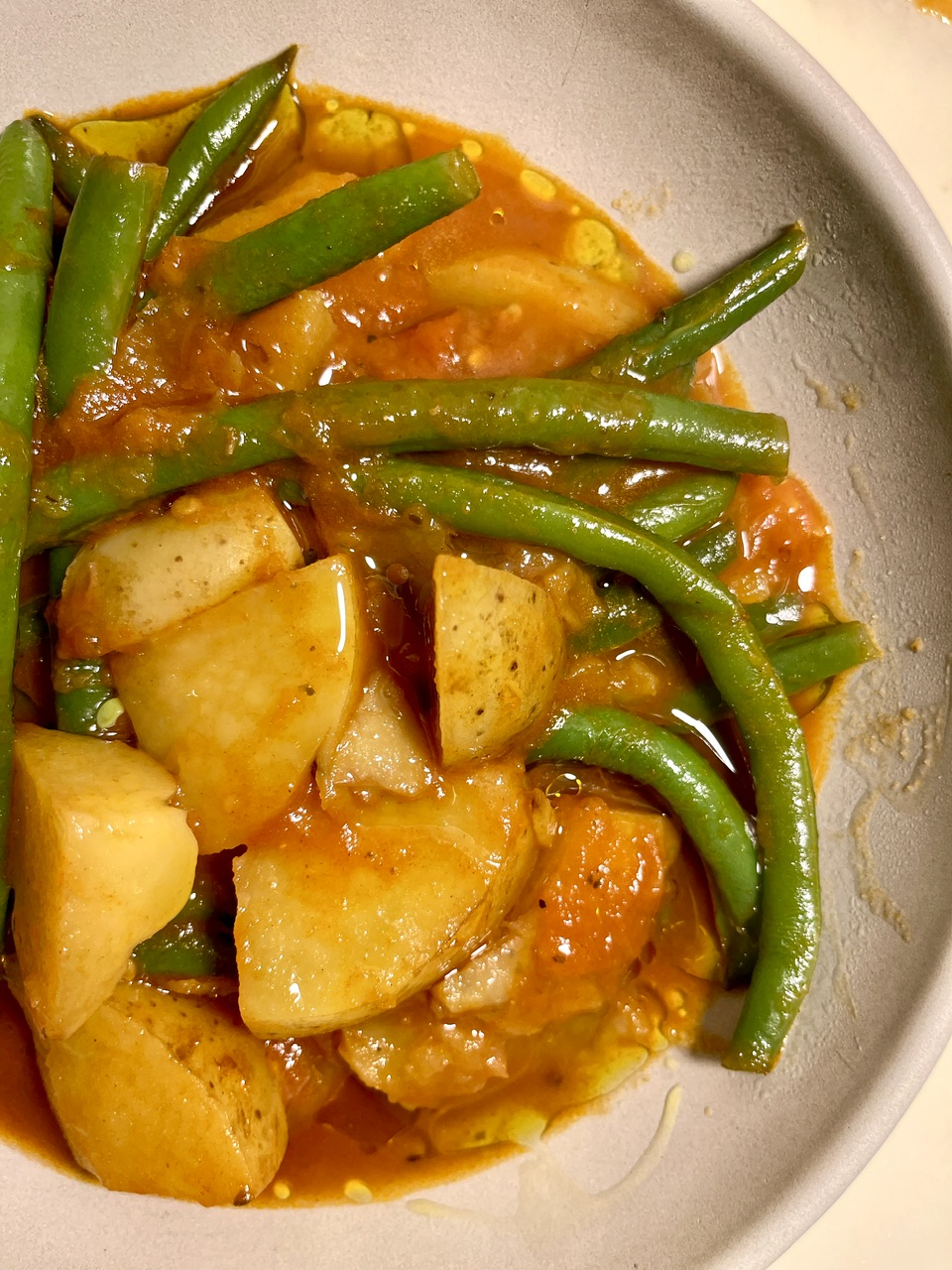
I love celebrating dishes that were vegan before vegan was a label.
Fasolakia Lathera is exactly that kind of food.
This classic Greek-style preparation of green beans cooked with tomatoes and olive oil is part of a broader tradition of lathera dishes—vegetables cooked generously with olive oil until tender and deeply flavorful. No meat substitute is needed. No complicated veganizing. No special ingredient required.
Just vegetables, olive oil, tomatoes, and time.
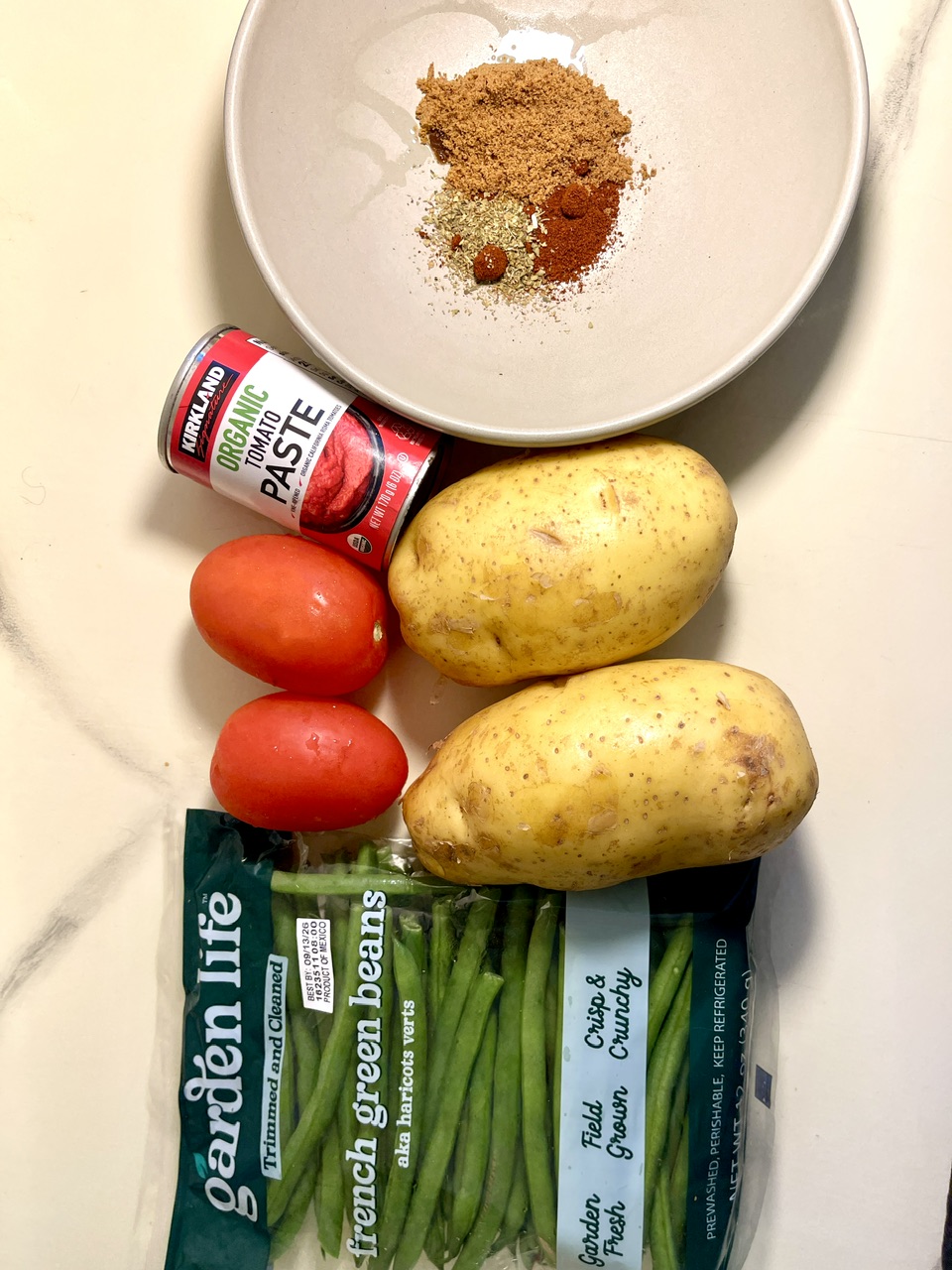
For my version, I wanted to make it even more accessible for a busy home cook. I skipped the aromatics entirely and kept the ingredient list focused: potatoes, green beans, tomatoes, tomato paste, Better Than Bouillon, nutritional yeast, paprika, a little sugar, salt, water or vegetable stock, and olive oil.
The result is humble, comforting, and incredibly satisfying.
And that's something worth celebrating: regional food traditions around the world contain so many naturally vegan dishes.
You don't always have to reinvent a classic. Sometimes you just have to notice that it was already vegan.
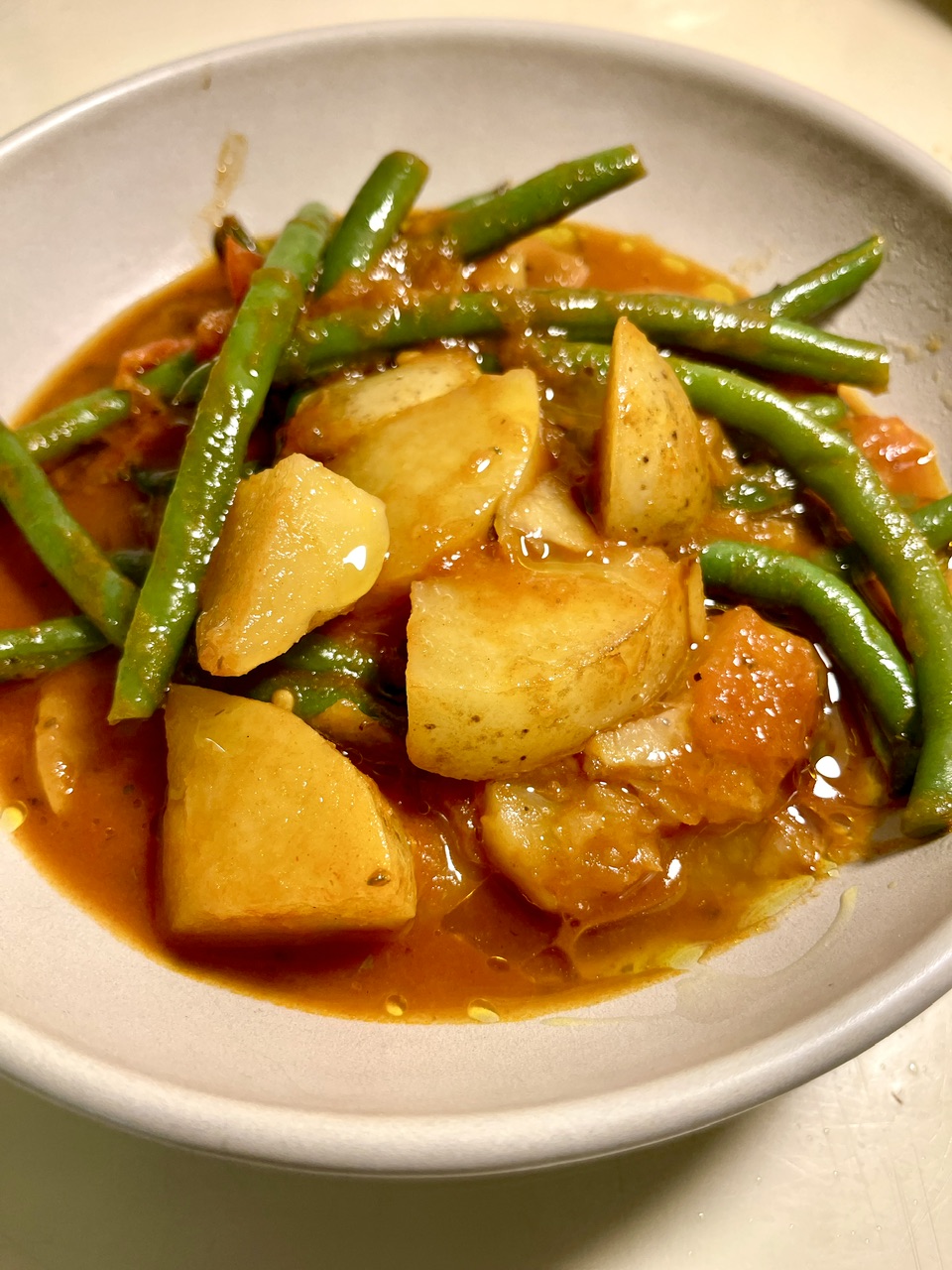
What Is Fasolakia Lathera?
Fasolakia Lathera is a Greek dish centered around green beans cooked in a tomato and olive oil-based sauce, often with potatoes.
The word fasolakia refers to green beans, while lathera comes from the Greek word for oil and generally describes vegetable dishes cooked generously in olive oil.
The cooking style is simple but effective: vegetables slowly cook in a flavorful tomato sauce until tender, allowing the olive oil, tomato, and vegetables to become one cohesive dish.
It's the kind of food that feels incredibly nourishing without trying to be trendy or complicated.
Why I Love Naturally Vegan Regional Dishes
There's something really exciting about exploring vegan food through the lens of regional cooking.
Instead of asking, "How do I make this traditional dish vegan?", sometimes the better question is:
"Was this dish already vegan?"
Across Mediterranean, Middle Eastern, African, Asian, Caribbean, and other food traditions, there are countless dishes built around vegetables, beans, grains, fruits, herbs, spices, and olive oil.
Fasolakia Lathera is a great example.
It's a reminder that plant-based cooking isn't necessarily about replacing meat and dairy. Sometimes it's about leaning into the ingredients that have always been there.
And personally, I think those recipes deserve more attention.
You can adjust the amount of liquid depending on how saucy you want the dish.
And don't be afraid of the olive oil.
The lathera part is important. Olive oil isn't just a garnish here; it's part of what makes the dish what it is.
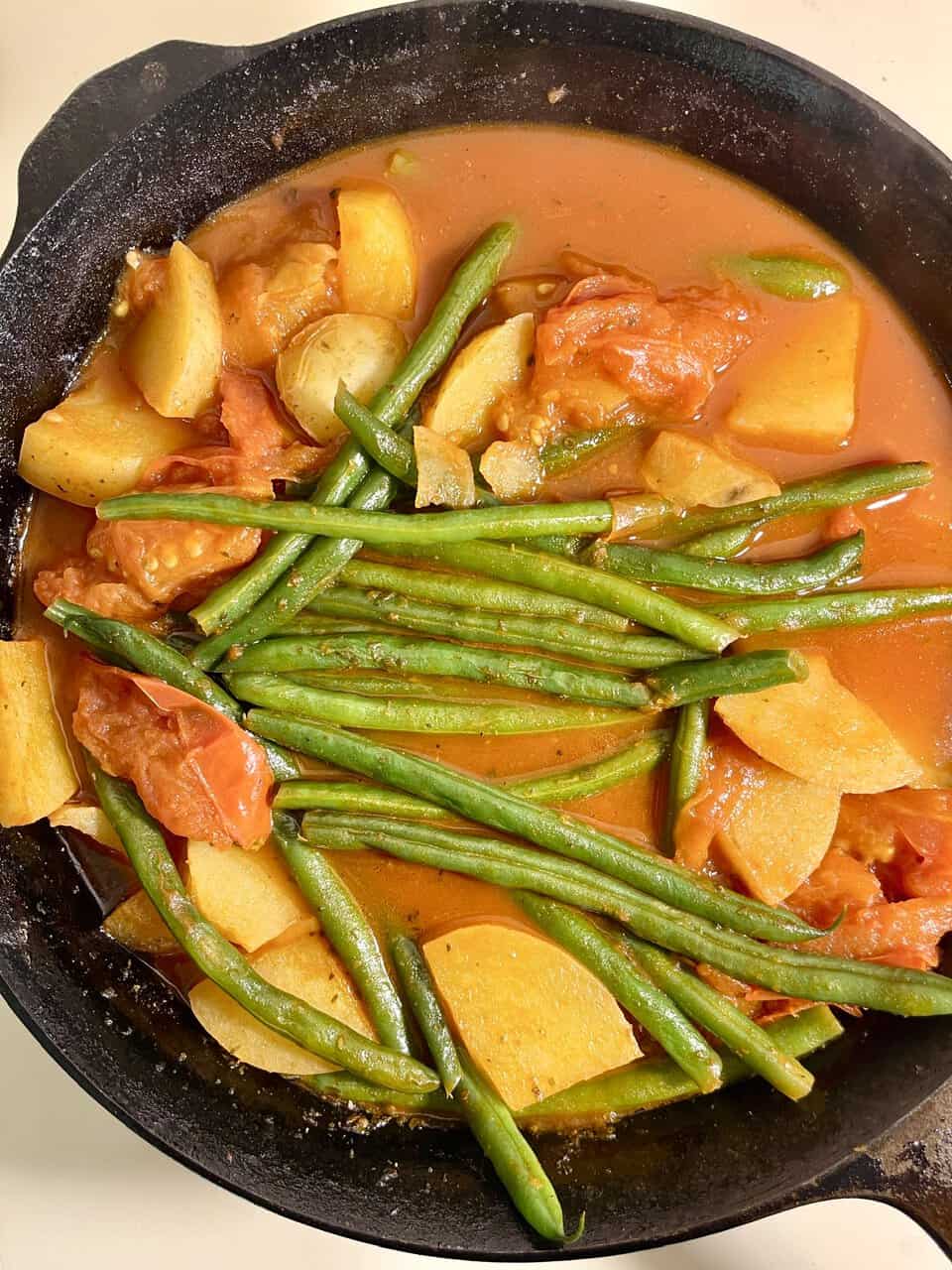
How to Make Fasolakia Lathera
1. Sauté the potatoes
Start by heating a generous drizzle of olive oil in a large, deep skillet or Dutch oven.
Add the potatoes and season with salt, pepper, and paprika.
Let them sauté for several minutes, turning occasionally, until they start to develop some golden color.
They don't need to be completely cooked at this point.
You're simply building a little color before everything starts simmering together.
2. Add the green beans
Add the trimmed green beans to the pan.
Give everything a good toss so the beans get coated in the olive oil and seasonings.
I like keeping the green beans fairly substantial rather than cutting them into tiny pieces.
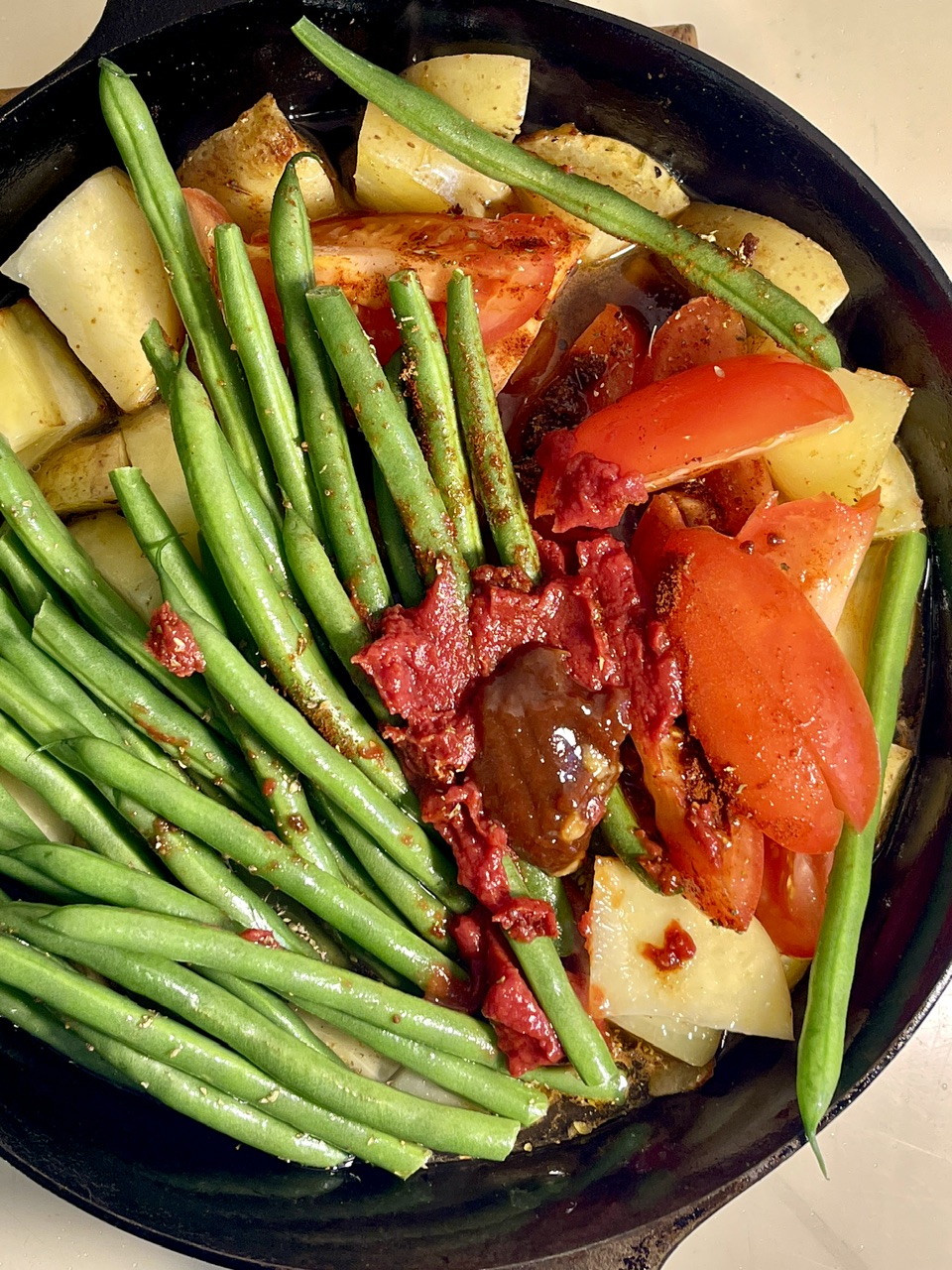
3. Add tomatoes and tomato paste
Add your chopped tomatoes and tomato paste.
Stir everything together.
The tomato paste gives the dish a deeper, more concentrated tomato flavor, while the fresh tomatoes provide moisture for the vegetables to cook in.
Add the sugar, nutritional yeast, Better Than Bouillon, and another pinch of salt.
4. Add the liquid
Pour in the water or vegetable stock.
You don't need to completely drown the vegetables.
The goal is to create enough liquid for the potatoes and green beans to simmer while allowing the sauce to eventually reduce.
Bring everything to a gentle simmer.
5. Let it cook
Cover the pan and let the vegetables cook over medium-low heat until the potatoes and green beans are tender.
Give it an occasional stir.
If it looks dry before the vegetables are tender, add another splash of water or stock.
If it looks too soupy near the end, remove the lid and let it simmer uncovered so the sauce can reduce.
This is one of those recipes where you should cook by feel.
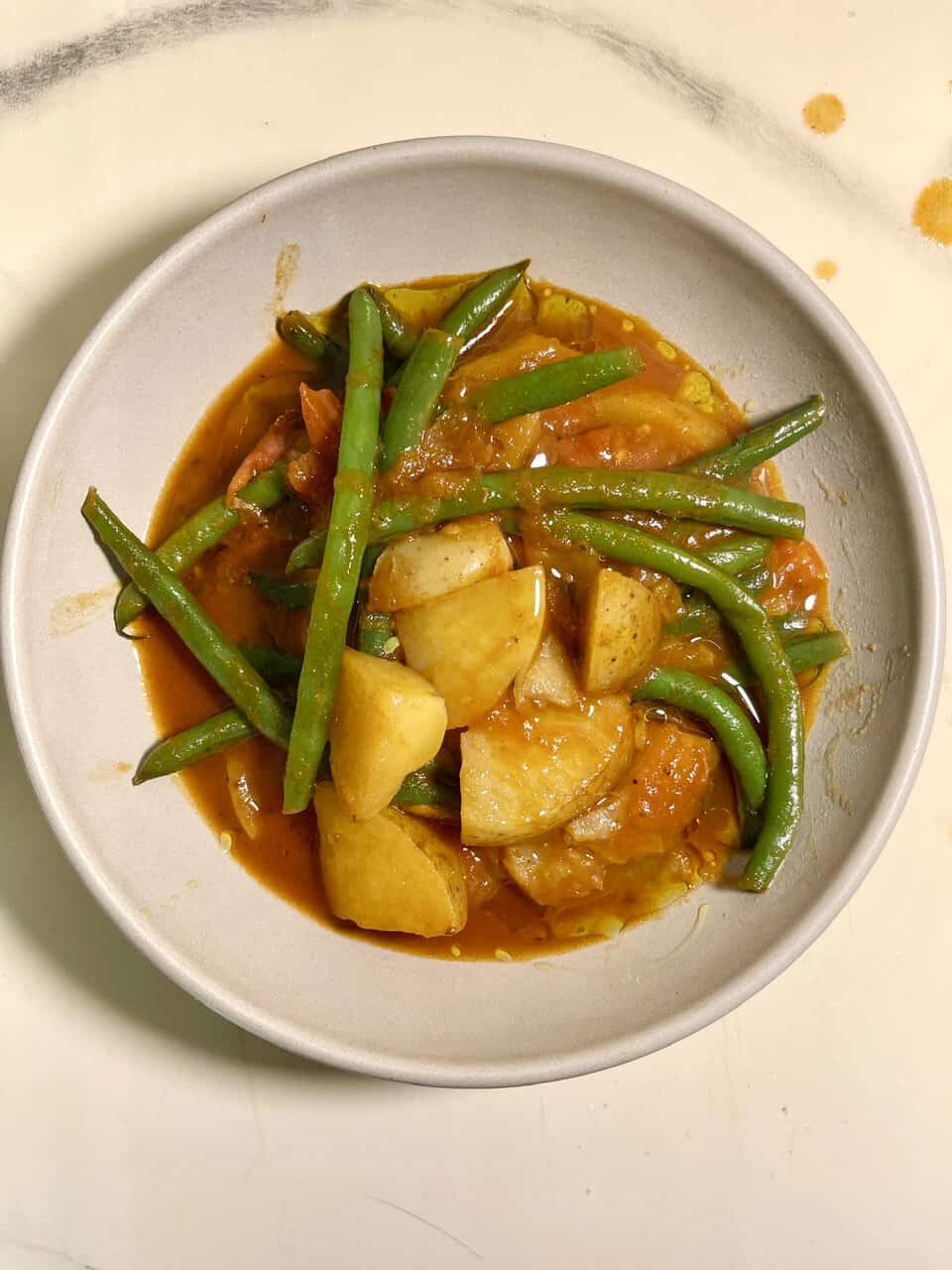
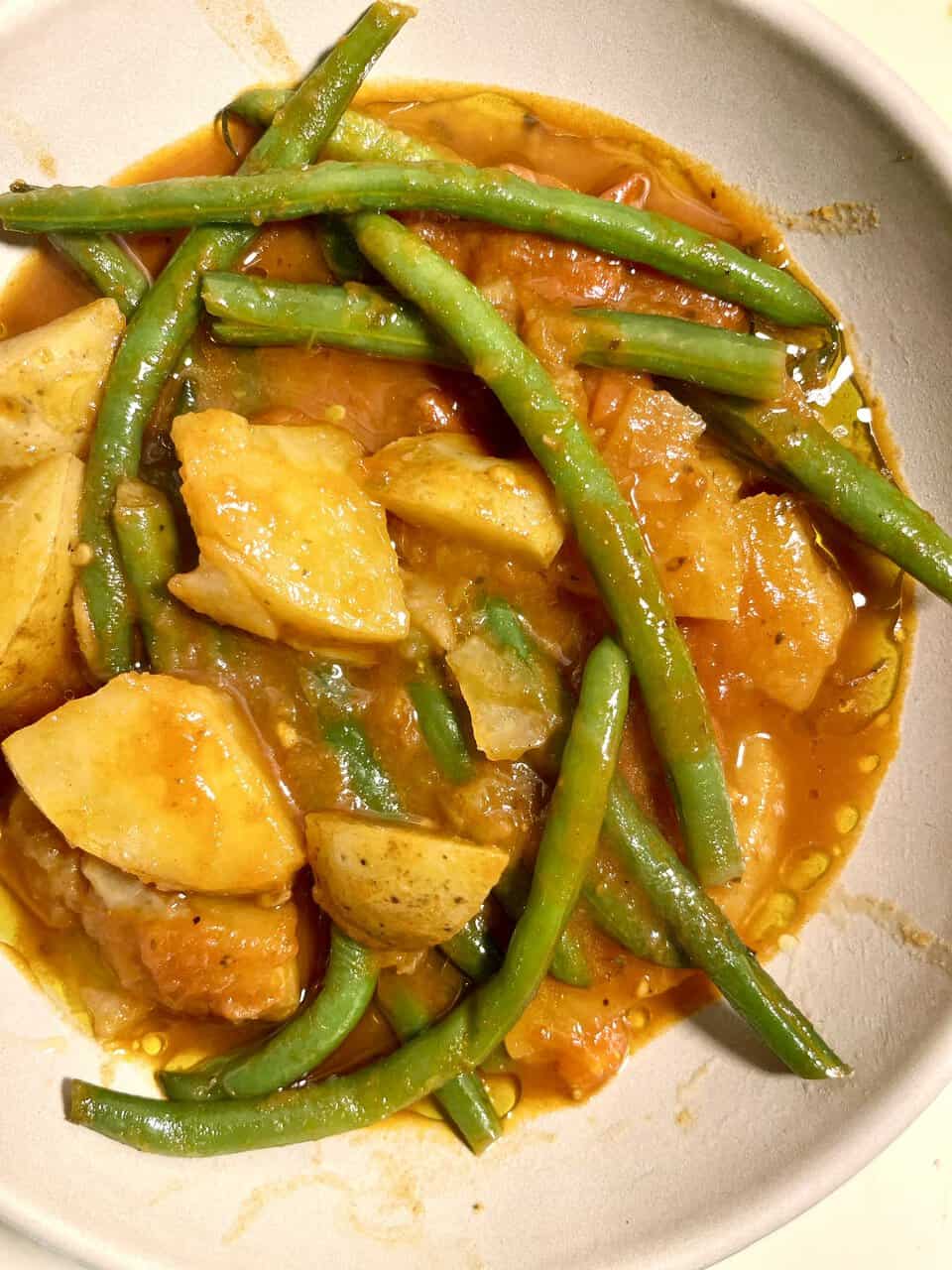
The vegetables should be tender, the tomatoes should have broken down, and the sauce should cling to everything.
6. Finish with olive oil
Taste for seasoning.
Add more salt, pepper, paprika, or lemon if you'd like a brighter finish.
Then drizzle generously with good olive oil.
That final drizzle is not optional in my kitchen.
It gives the dish a fresh, rich finish and reinforces what makes lathera cooking so special.
The Kitchen Technique: Let the Vegetables Become the Sauce
One of my favorite things about Fasolakia Lathera is that you don't need to make a separate sauce.
The tomatoes break down.
The tomato paste concentrates.
The potatoes release some starch.
The green beans become tender.
The olive oil emulsifies with the cooking liquid.
And suddenly you've got this beautiful tomatoey sauce coating everything.
That's the technique to remember.
Don't rush the simmer.
You're allowing the ingredients to transform together.
Why Add Nutritional Yeast?
Nutritional yeast isn't necessarily required for a traditional Fasolakia Lathera-style dish.
I use it here as a little vegan pantry hack.
It adds savory, slightly cheesy depth to the tomato sauce and helps give the dish a little more umami.
If you don't have it, simply leave it out.
The tomatoes, olive oil, Better Than Bouillon, and seasonings are already doing plenty of work.
Why Add Sugar?
Tomatoes can vary dramatically in acidity.
A small amount of sugar helps balance particularly tart tomatoes.
It shouldn't make the dish taste sweet.
Think of it as a seasoning that rounds out the tomato flavor.
You can also use a little maple syrup or another sweetener, or omit it completely if your tomatoes are naturally sweet.
Do I Need Aromatics?
No—and that's part of the appeal of my quick version.
Traditional preparations can include aromatics such as onion and garlic, but this version skips them.
Instead, we're relying on:
tomatoes + tomato paste + olive oil + Better Than Bouillon + paprika + nutritional yeast
to create the flavor base.
It's proof that you can make a deeply satisfying vegetable dish without starting every recipe with onion and garlic.
If you love aromatics, though, absolutely add them.
A sautéed onion or a few cloves of garlic would fit beautifully.
Can I Use Frozen Green Beans?
Yes.
Frozen green beans are a great shortcut.
You don't necessarily need to thaw them first. Just add them to the pan and allow a little extra cooking time.
The texture may be slightly softer than fresh green beans, but they'll still work well in this saucy preparation.
Can I Use Canned Tomatoes?
Absolutely.
Crushed tomatoes, diced tomatoes, or whole peeled tomatoes that you crush with your hands will all work.
If using canned tomatoes, you may need slightly less water or vegetable stock because canned tomatoes already contain quite a bit of liquid.
What Kind of Potatoes Should I Use?
Almost any potato works.
Yukon Gold-style potatoes are especially nice because they become creamy while holding their shape.
Russet potatoes work too, although they can break down more easily.
And honestly, I don't mind a few potatoes falling apart.
Those little pieces help thicken the tomato sauce.
How to Serve Fasolakia Lathera
Fasolakia can absolutely stand on its own as a meal.
But here are some of my favorite ways to serve it.
With Crusty Bread
Probably the easiest option.
Use the bread to soak up every bit of tomato and olive oil.
With Rice
Serve the green beans and potatoes over rice for an extra hearty bowl.
The tomato sauce basically becomes its own gravy.
With a Greek-Inspired Salad
A simple salad of tomatoes, cucumber, greens, herbs, lemon, and olive oil makes a beautiful contrast to the warm, saucy vegetables.
As Part of a Bigger Vegan Spread
This is where dishes like Fasolakia really shine.
Serve it alongside hummus, olives, pita, roasted vegetables, rice, and another bean dish.
You suddenly have a beautiful plant-based table without needing a single meat substitute.
Easy Variations
Add Garlic and Onion
If you aren't committed to the no-aromatics version, sauté diced onion and garlic before adding the potatoes.
Add Herbs
Fresh parsley, dill, oregano, or basil can be added toward the end.
Make It Spicy
Add chili flakes or a pinch of cayenne with the paprika.
Add Chickpeas
For a more protein-forward version, add a can of chickpeas during the final part of cooking.
Add Lemon
A squeeze of fresh lemon at the end gives the tomato sauce a bright finish.
Make It Extra Olive-Oil Forward
If you love the traditional spirit of lathera cooking, finish with a generous drizzle of your best olive oil right before serving.
Fasolakia Lathera Formula
If you want to improvise this recipe, remember this:
Green vegetable + starchy vegetable + tomato + olive oil + savory seasoning + gentle simmer.
That's your foundation.
From there, you can change things depending on what's in your kitchen.
Don't have potatoes? Try zucchini.
Have extra chickpeas? Add them.
Have a bunch of herbs? Throw them in.
Want more heat? Add chili.
Want it richer? Add olive oil.
This is the kind of recipe where knowing the method is more valuable than memorizing the ingredient list.
Frequently Asked Questions
Is Fasolakia Lathera vegan?
Yes. Fasolakia Lathera is naturally plant-based when prepared with vegetables, tomatoes, olive oil, and plant-based seasonings. Just check packaged broths or bouillon products if strict vegan ingredients are important to you.
What does lathera mean?
Lathera refers to Greek vegetable dishes cooked with olive oil. The olive oil is an important part of the cooking method and finished dish.
Can Fasolakia Lathera be a main dish?
Definitely. Serve it with crusty bread, rice, or another grain for a satisfying vegan meal.
Why are my green beans tough?
They probably need more cooking time or additional moisture. Add a splash of water or vegetable stock, cover the pan, and continue simmering until tender.
Should Fasolakia Lathera be soupy?
Not really. You want a generous tomato sauce that coats the vegetables rather than a thin soup. If yours is too watery, simmer uncovered toward the end.
Can I make it ahead?
Yes. In fact, the flavors can become even more cohesive after resting. Refrigerate leftovers in an airtight container and gently reheat on the stove.
Storage
Store leftovers in an airtight container in the refrigerator for about 3–4 days.
When reheating, add a splash of water or vegetable stock if the sauce has thickened too much.
I also recommend finishing reheated leftovers with fresh olive oil and, if you like, a squeeze of lemon.
Estimated Nutrition
Calories: approximately 300–350 kcal per serving
This is an estimate and will vary depending on the amount of olive oil and potatoes used.
More Naturally Vegan Recipes
If you enjoy recipes that celebrate vegetables, beans, and pantry staples without relying on meat substitutes, explore more of the plant-forward recipes on Make Pure Thy Heart, including:
- Smashed Chickpea Broccoli Stew
- Harissa Chickpeas
- Chickpeas and Butter Beans alla Nerano
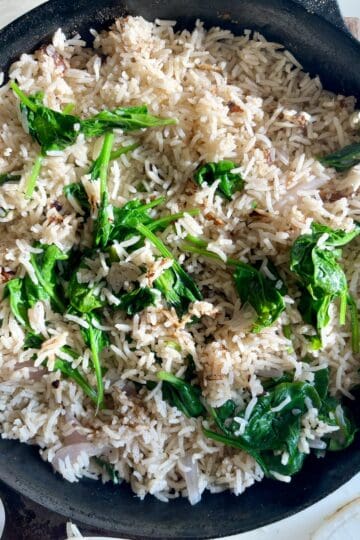
- Greek Spinach Rice
- Three Sisters Salad with Cream of Corn Dressing
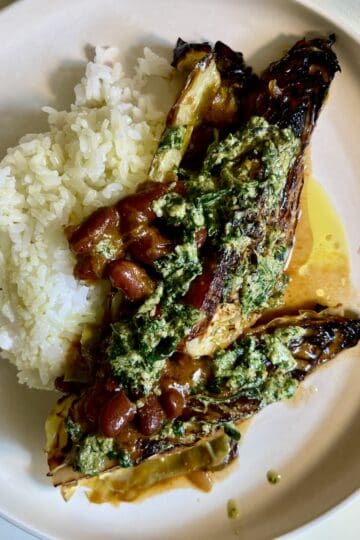
- Seared Cabbage Wedges and Mushrooms in Creamy Miso Sauce
- Lebanese-Inspired White Bean Stew (vegan Fasolia)
- Protein Packed Rajma Chawal (Red Kidney Bean Stew)
Final Thoughts
Fasolakia Lathera is a great reminder of why I love looking beyond the usual definition of vegan food.
Sometimes the most exciting plant-based meals aren't elaborate recreations of something else. They're regional dishes that have always centered vegetables.
This quick version is especially practical because you don't need to build a complicated flavor base. Sauté the potatoes, add the green beans and tomatoes, season everything, add your stock or water, and let the vegetables slowly become tender in that rich tomato and olive oil sauce.
That's it.
No meat substitute. No complicated technique. No long ingredient list.
Just good vegetables cooked well.
And maybe that's the bigger lesson here: vegan cooking doesn't always need to be invented. Sometimes it's already sitting in the food traditions we should be celebrating.
Fasolakia Lathera (Greek Green Bean & Potato Stew)
Ingredients
- 1 pound fresh green beans trimmed
- 2 medium potatoes peeled or unpeeled and cut into chunks
- 2 –3 large tomatoes chopped, or about 2 cups crushed tomatoes
- 2 tablespoons tomato paste
- 3 –4 tablespoons olive oil plus more for finishing
- 1 teaspoon Better Than Bouillon
- 1 teaspoon nutritional yeast
- 1 teaspoon paprika
- 1 teaspoon sugar
- Salt to taste
- Black pepper to taste
- 1 –1½ cups water or vegetable stock
Instructions
- Sauté the potatoes. Heat a generous drizzle of olive oil in a large skillet or Dutch oven over medium-high heat. Add the potatoes, season with salt, black pepper, and paprika, and sauté for several minutes until they begin to develop golden edges. They don't need to be fully cooked yet.
- Add the green beans. Add the trimmed green beans to the potatoes and toss everything together so the vegetables are coated in the seasoned olive oil. Cook for a few minutes, allowing the beans to pick up some color while the potatoes continue to cook.
- Build the tomato base. Stir in the chopped tomatoes and tomato paste, then add the Better Than Bouillon, nutritional yeast, sugar, and another pinch of salt. Stir well so the tomato paste coats the vegetables and starts to cook into the olive oil.
- Add the liquid and simmer. Pour in the water or vegetable stock, using enough to create a generous tomato sauce without completely submerging the vegetables. Bring everything to a gentle simmer, cover, and cook until the potatoes and green beans are tender, stirring occasionally and adding another splash of liquid if needed.
- Reduce the sauce. Once the vegetables are tender, uncover the pan and let everything simmer for a few more minutes if the sauce needs to thicken. Taste and adjust the salt, paprika, pepper, or sugar. You want the finished sauce to be rich and tomatoey, with enough olive oil to give it that signature lathera-style finish.
- Finish and serve. Drizzle generously with good olive oil before serving. Enjoy the Fasolakia Lathera warm with crusty bread, rice, or a simple salad, or let it become part of a larger spread of naturally vegan Greek-inspired dishes.

Comments
No Comments