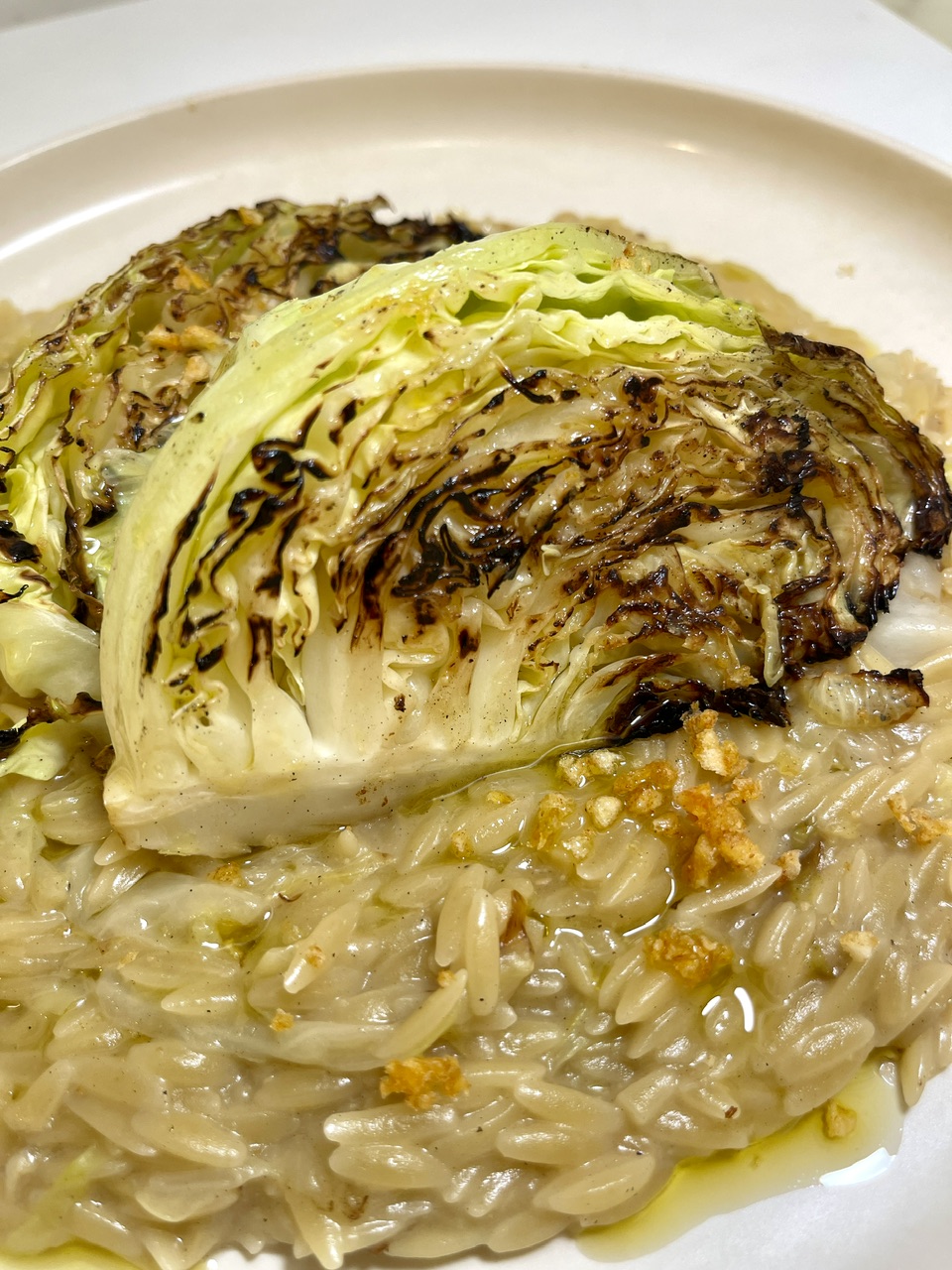
Caramelized Cabbage with Creamy Vegan Cheezy Orzo (Easy One-Pan Dinner)

Make caramelized cabbage with creamy vegan cheezy orzo, miso, vegetable stock, and vegan Parmesan. An easy, savory plant-based dinner with golden seared cabbage.
Ingredients
For the cabbage
- - ½ medium green cabbage divided
- - 3 tablespoons olive oil divided, plus more for finishing
- - ½ teaspoon salt or to taste
- - ¼ teaspoon freshly ground black pepper
- - ½ teaspoon garlic powder optional
- - ¼ teaspoon smoked paprika optional
For the vegan cheezy orzo
- - 1½ cups dry orzo
- - 3½–4 cups vegetable stock warmed
- - 1 tablespoon white or yellow miso paste
- - ½ cup grated vegan Parmesan plus more for serving
- - 1 tablespoon olive oil if needed
- - Black pepper to taste
- - Salt only if needed after tasting
For serving
- - Crushed potato chips
- - Extra virgin olive oil
- - More vegan Parmesan
- - Fresh parsley or chives optional
- - Lemon zest or a small squeeze of lemon optional
Instructions
- Prepare the cabbage. Remove any damaged outer leaves and cut the cabbage in half. Take one quarter and cut it into thick wedges, keeping a little of the core attached so the wedges hold together. Thinly julienne the remaining quarter. Keep the two preparations separate because they cook differently.
- Sear the cabbage wedges. Heat olive oil in a large skillet over medium-high heat. Place the wedges cut-side down and let them cook undisturbed until deeply golden, then turn and sear the other side. Season with salt and pepper. You want the edges slightly charred and the centers beginning to soften. Transfer the wedges to a plate and set aside.
- Caramelize the sliced cabbage. Add another drizzle of olive oil to the same pan. Add the julienned cabbage and cook over medium heat, stirring occasionally. Let it soften and develop golden-brown edges. This step builds sweetness and leaves flavorful browned bits in the skillet. Avoid rushing it; give the cabbage time to cook down.
- Toast the orzo with miso. Add the dry orzo to the pan with the caramelized cabbage. Stir for about a minute so the pasta gets coated in the oil and cabbage. Add the miso paste and stir to distribute it. If the miso is difficult to incorporate, loosen it with a small splash of warm vegetable stock before adding it to the pan.
- Cook until creamy. Pour in the warm vegetable stock, starting with about 3½ cups. Stir frequently as the orzo simmers, scraping the bottom of the pan so nothing sticks. Add more stock as needed until the pasta is tender and the mixture looks creamy. Stir in the vegan Parmesan and black pepper. Taste before adding extra salt because both miso and vegan Parmesan can be salty.
- Assemble and finish. Spoon the creamy cheezy orzo onto serving plates. Arrange the golden cabbage wedges on top, then finish with another drizzle of olive oil, extra vegan Parmesan, and crushed potato chips. Add fresh herbs or a little lemon zest if you want a brighter finish. Serve immediately while the orzo is creamy and the topping is crisp.